Lemon Pudding Cookies with Lemon Cream Cheese Frosting

Last floor hockey of the regular season, last…batch of cookies for the regular season? Guess so! My mother’d bought a bunch of lemon pudding that it turned out she didn’t need, so I looked around for a lemon pudding cookies recipe, then slapped some frosting on top. Why on Earth not?!

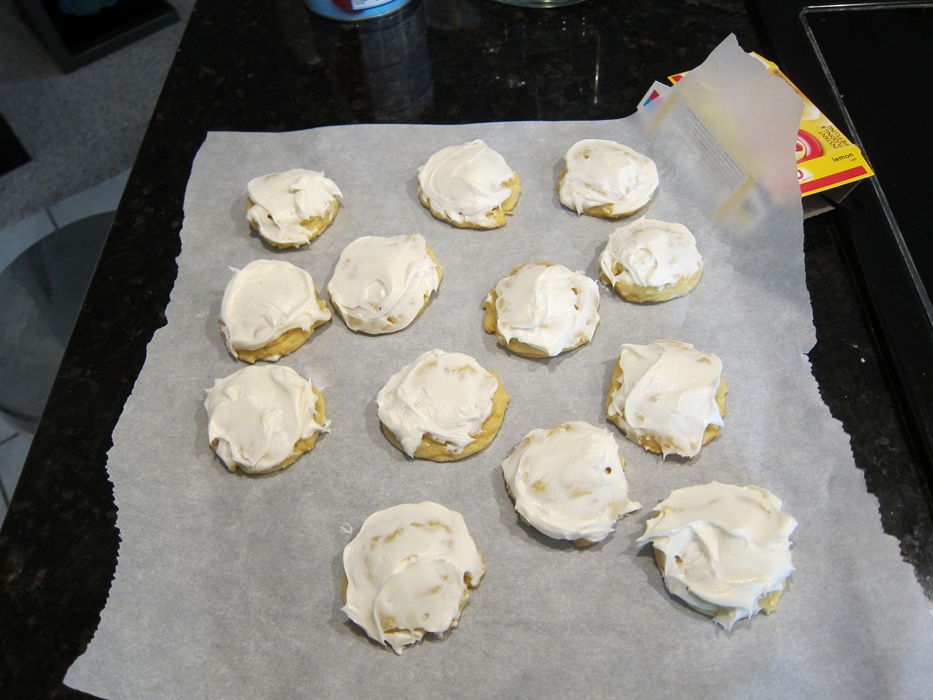
“Slap on some frosting” looking a bit too literal here…

Ingredients:

Cookies:

  • 1 cup butter, room temperature
  • 1/2 cup sugar
  • 1 3.4 ounce box lemon pudding mix
  • 1 teaspoon vanilla
  • 2 eggs
  • 2 1/2 cups flour
  • 1 teaspoon baking soda
  • 1/2 teaspoon salt

Frosting:

  • 2 tablespoons butter, room temperature
  • 4 ounces cream cheese, room temperature
  • 2 cups powdered sugar
  • 1 1/2 teaspoons lemon extract

In this recipe, any time there’s a step in the mixer, just assume you should scrape down the bowl at least once – don’t let any unmixed bits stick to the bottom!

Preheat the oven to 350 degrees. Line to baking sheets with parchment and set aside. In a medium bowl, sift together the flour, baking soda, and salt and set aside.

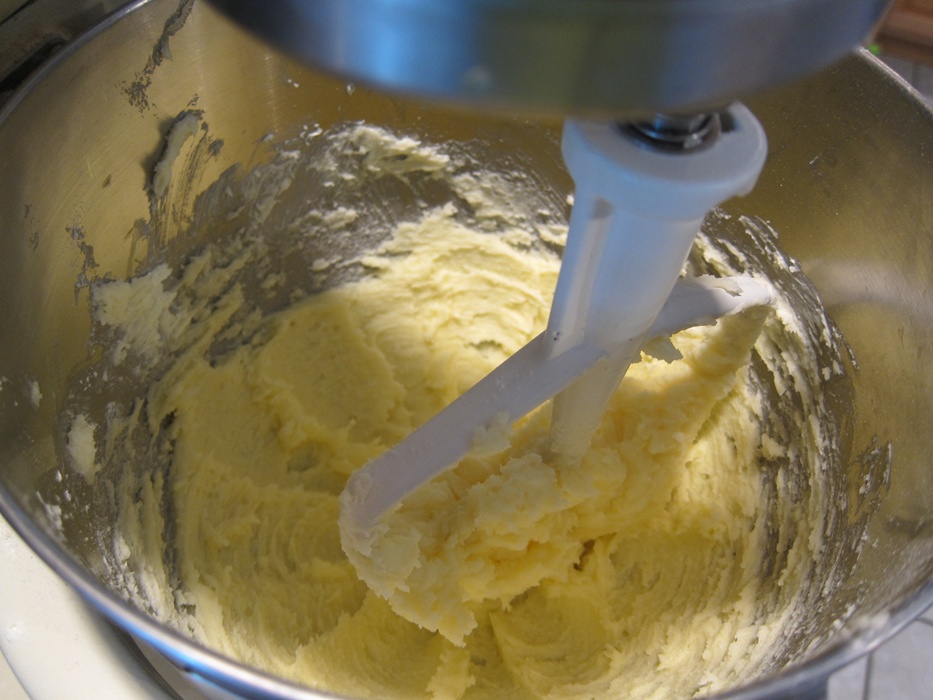
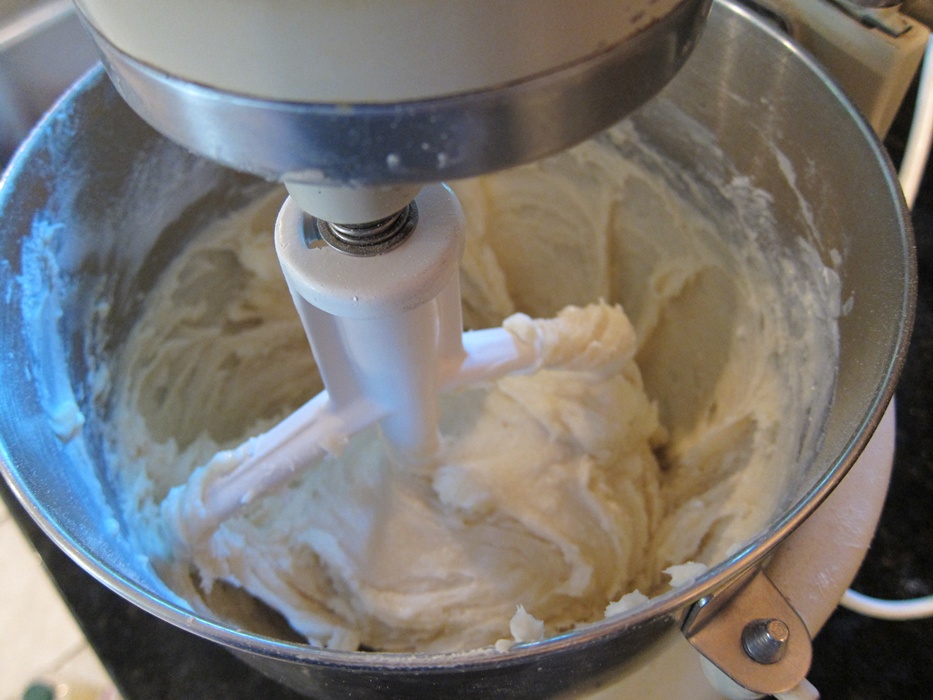
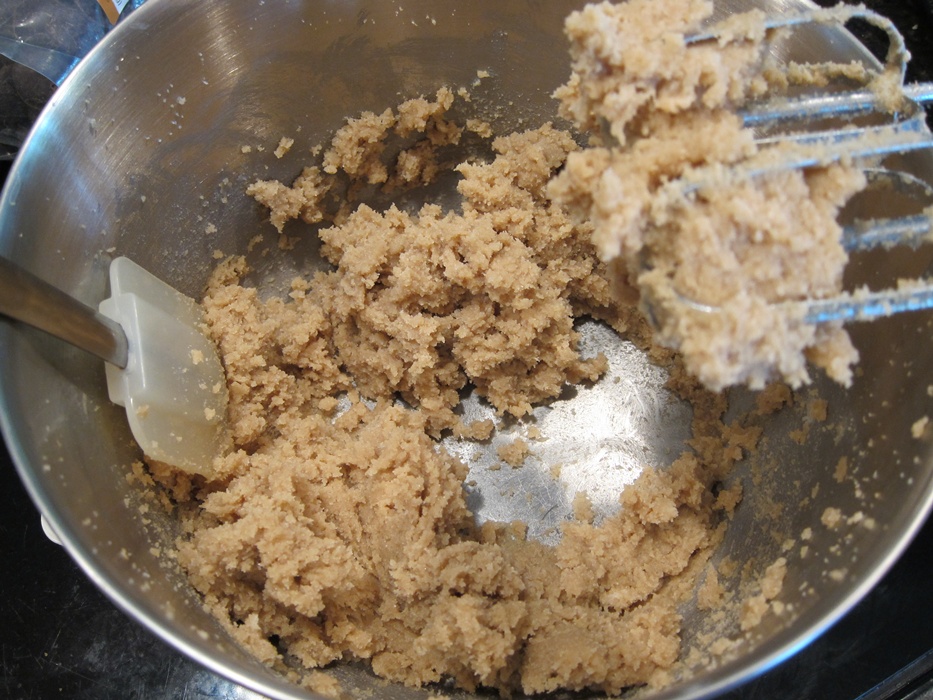
In a large bowl, cream the butter and sugar. Add the pudding mix and beat until smooth.

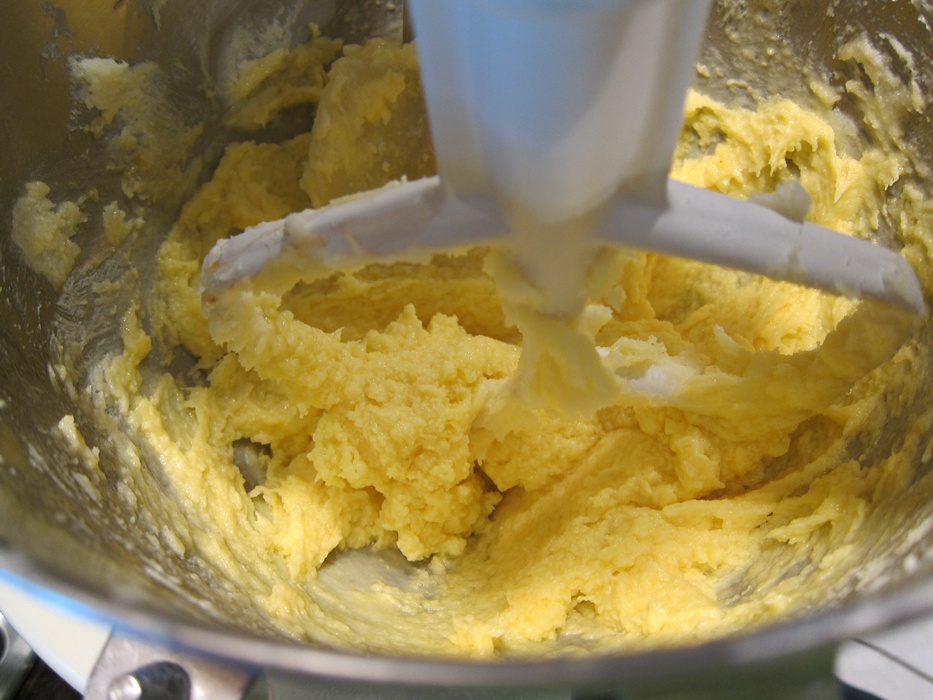
Beat in the eggs and vanilla.

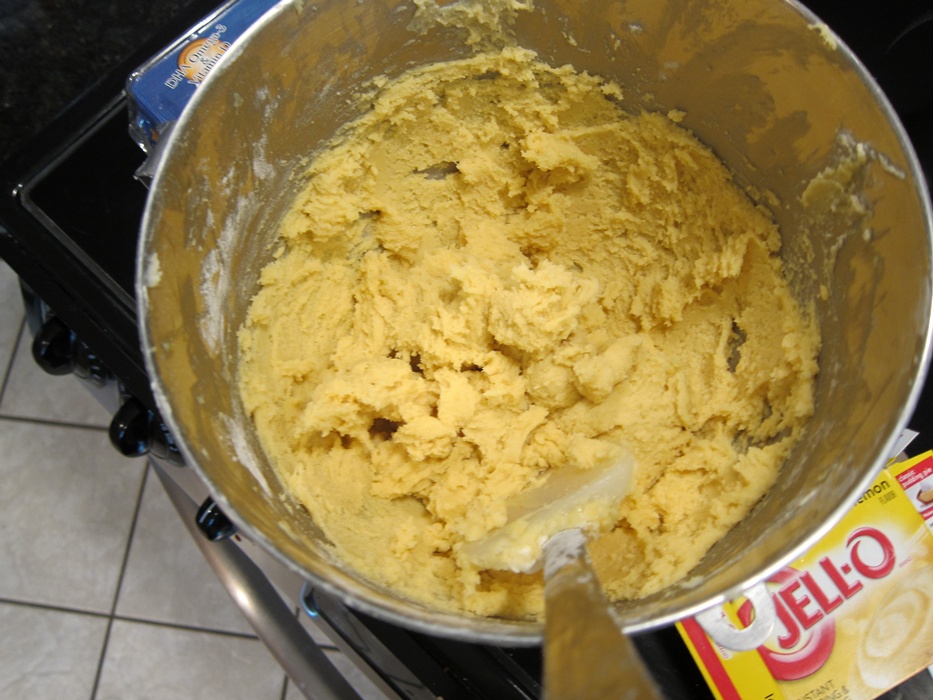
Add the flour mixture and beat until just combined.

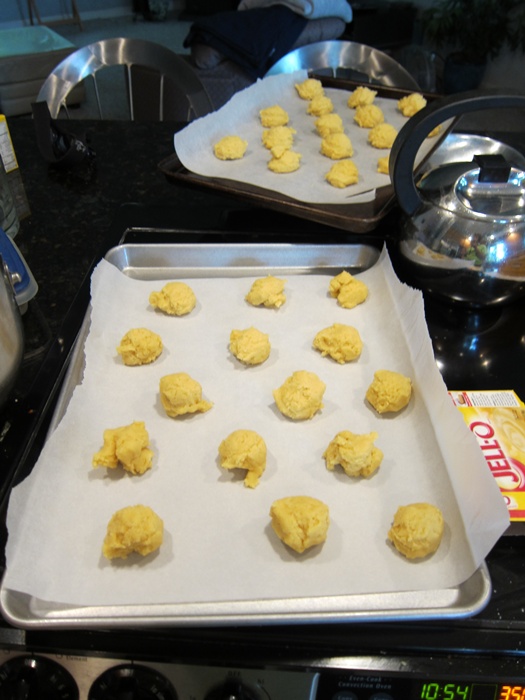
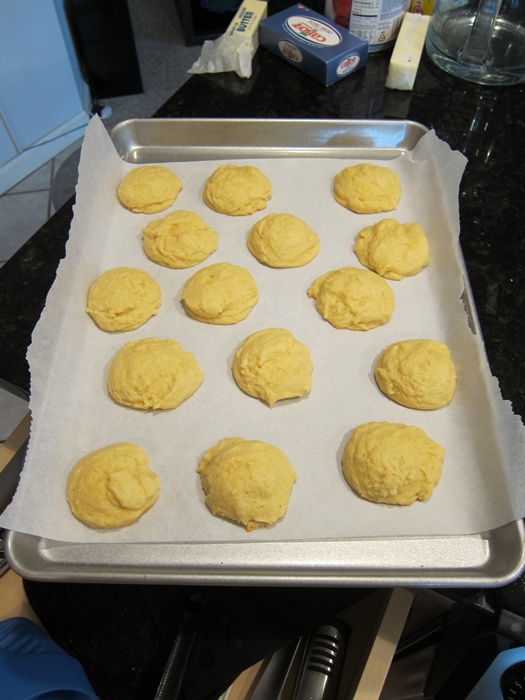
Spoon rounded tablespoons onto the lined sheets.

Bake 9-10 minutes.

Let cool several minutes, then transfer to a wire rack to cool completely before frosting. They’ll flatten out some while cooling.

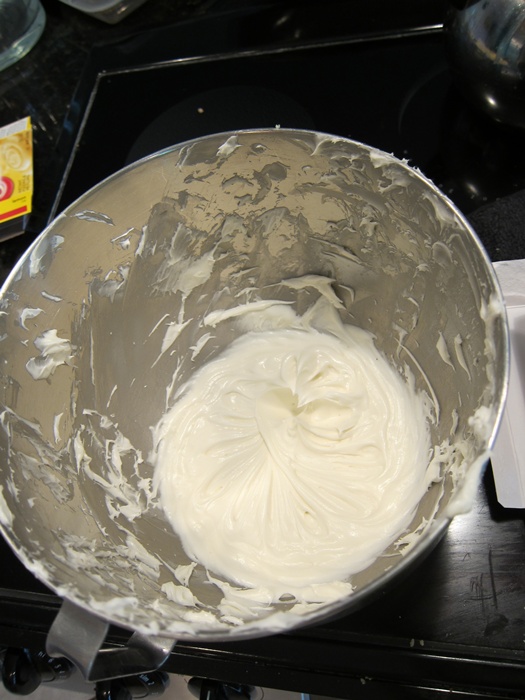
To make the frosting, first beat together the butter and cream cheese. Beat in the powdered sugar until smooth, then add the lemon extract and beat again. If you really don’t want to buy lemon extract, you can try lemon juice, but you will probably need more to get as strong a lemon flavor, which might require more powdered sugar if the frosting then gets too thin…

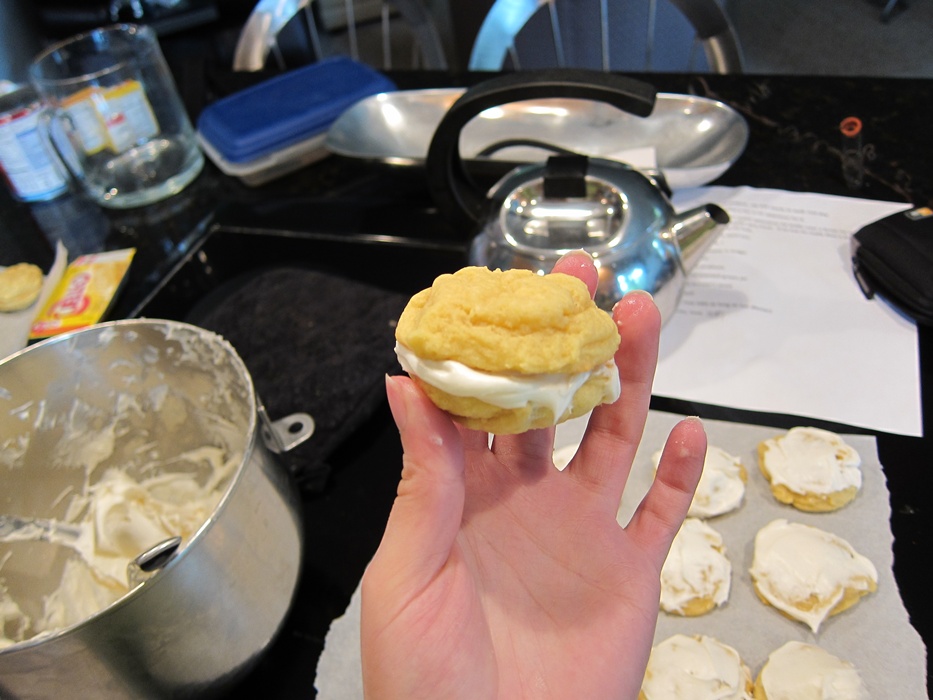
You can make sandwiches if you like…

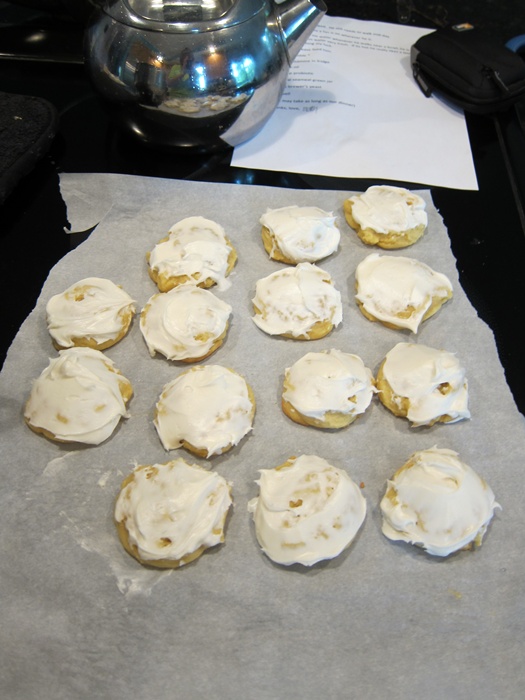
But mostly I just put some frosting on top. 30 cookies seems like way more than 15 sandwiches!

The pudding makes a tasty flavor, and the cookies are quite light and soft. If you leave the cookies out for a while after frosting, the frosting will harden up and you can transport them (say, to hockey) without getting frosting all over the place.

Lemon Pudding Cookies with Lemon Cream Cheese Frosting

Cookie adapted from Missy’s Kitchen Adventures.

Cookies:

  • 1 cup butter, room temperature
  • 1/2 cup sugar
  • 1 3.4 ounce box lemon pudding mix
  • 1 teaspoon vanilla
  • 2 eggs
  • 2 1/2 cups flour
  • 1 teaspoon baking soda
  • 1/2 teaspoon salt

Frosting:

  • 2 tablespoons butter, room temperature
  • 4 ounces cream cheese, room temperature
  • 2 cups powdered sugar
  • 1 1/2 teaspoons lemon extract

Preheat the oven to 350 degrees. Line to baking sheets with parchment and set aside. In a medium bowl, sift together the flour, baking soda, and salt and set aside.

In a large bowl, cream the butter and sugar. Add the pudding mix and beat until smooth. Beat in the eggs and vanilla. Add the flour mixture and beat until just combined. Spoon rounded tablespoons onto the lined sheets. Bake 9-10 minutes. Let cool several minutes, then transfer to a wire rack to cool completely before frosting.

To make the frosting, first beat together the butter and cream cheese. Beat in the powdered sugar until smooth, then add the lemon extract and beat again. Frost the cookies, either on the tops, or frosting the bottom of one and making a sandwich with another cookie.

Posted in Dessert | Tagged , , , , | Leave a comment

Chocolate Battenberg Cake

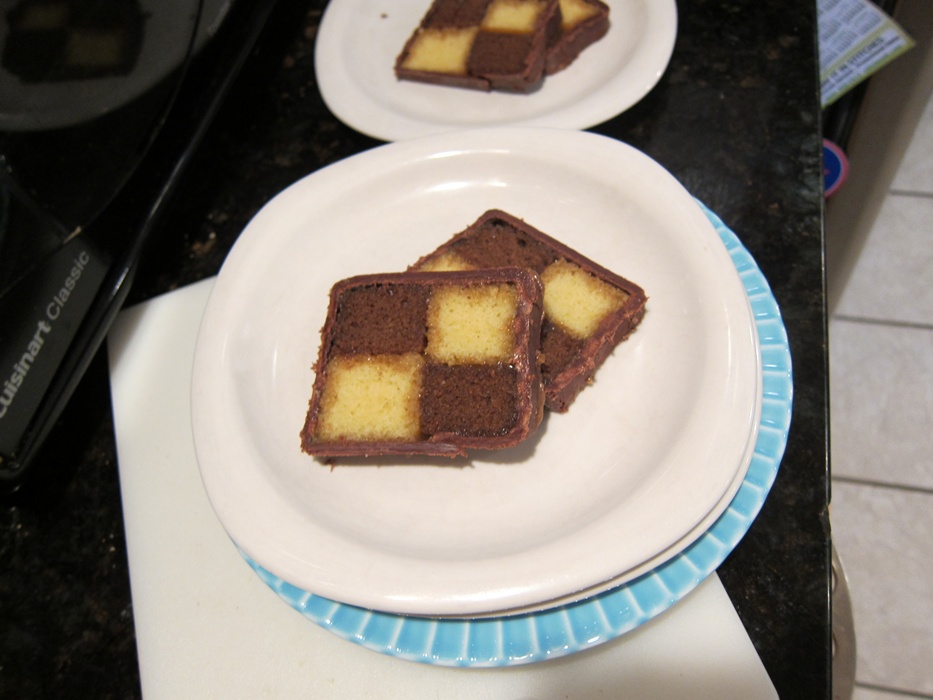
It’s the end of the month, which means it’s once again time for a Daring Bakers post! This month Mandy of What The Fruitcake?! came to our rescue last minute to present us with the Battenberg Cake challenge! She highlighted Mary Berry’s techniques and recipes to allow us to create this unique little cake with ease. The traditional Battenberg has nuts in it, is glued together with apricot preserves, and has a marzipan coating. Barf. I made a Battenberg I’d actually eat, which means chocolate, chocolate, and glued together with caramel sauce.
Ingredients:

Cake:

  • 1 cup all-purpose flour
  • 1 1/2 sticks butter, at room temperature
  • 1 1/4 cups powdered sugar
  • 1 teaspoon vanilla extract
  • 3 eggs, at room temperature
  • 1 3/4 teaspoons baking powder
  • 2 tablespoons cocoa powder, sifted
  • 1-2 tablespoons milk

Chocolate Plastique:

  • 7 ounces semisweet chocolate
  • 2 tablespoon light corn syrup
  • caramel sauce

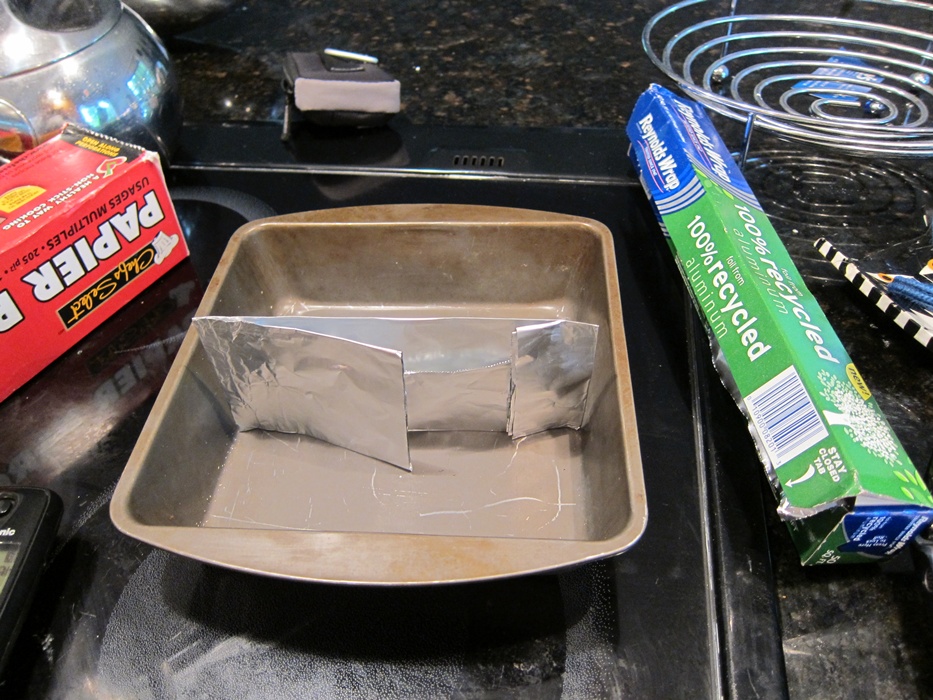
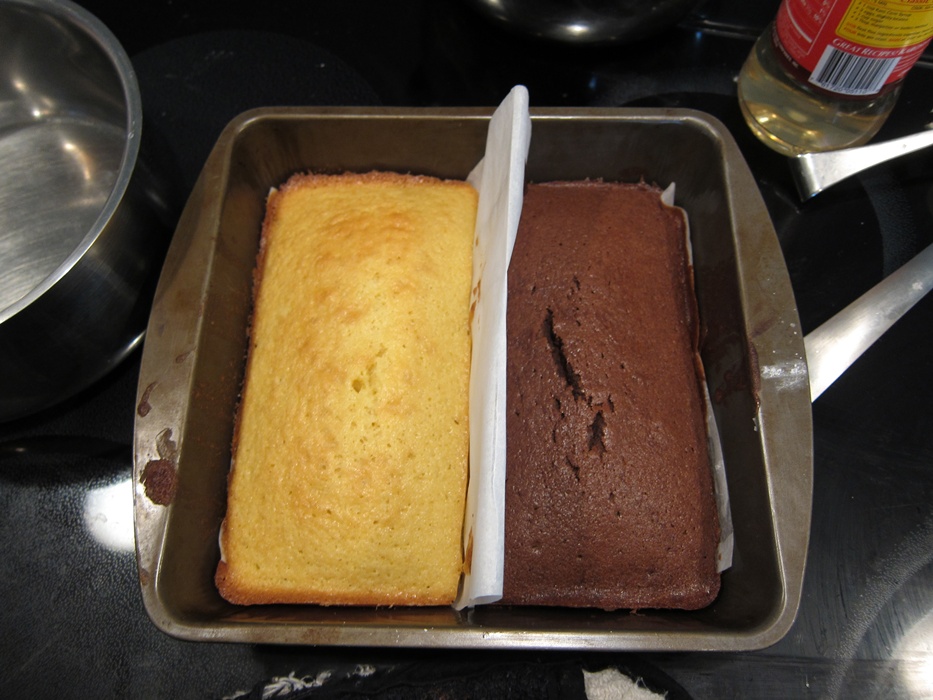
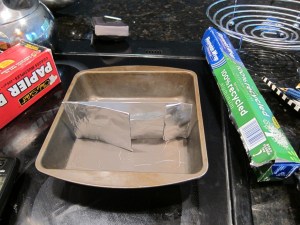
The first thing to do, if you don’t have a pan specifically for making this cake, is to set up your pan. Fold a piece of foil so that it’s several layers thick, 2-3 inches tall, and wide enough to divide an 8X8″ square pan.
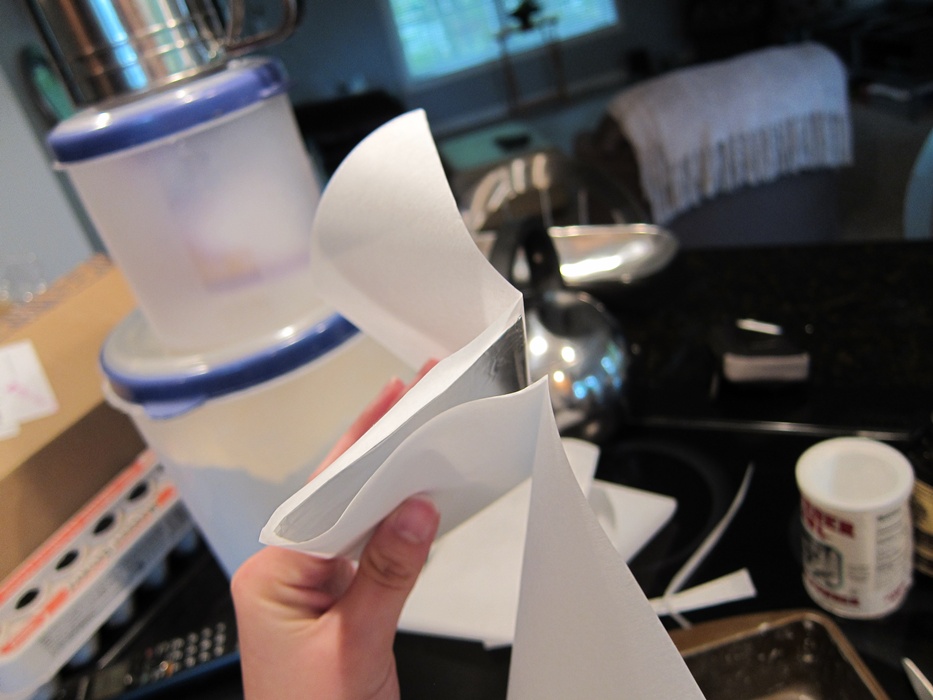
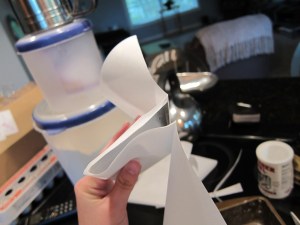
Fold parchment paper in a W around the foil, cutting the parchment so that it’s the width of the pan, and long enough to cover the bottom on each side of the foil divider.
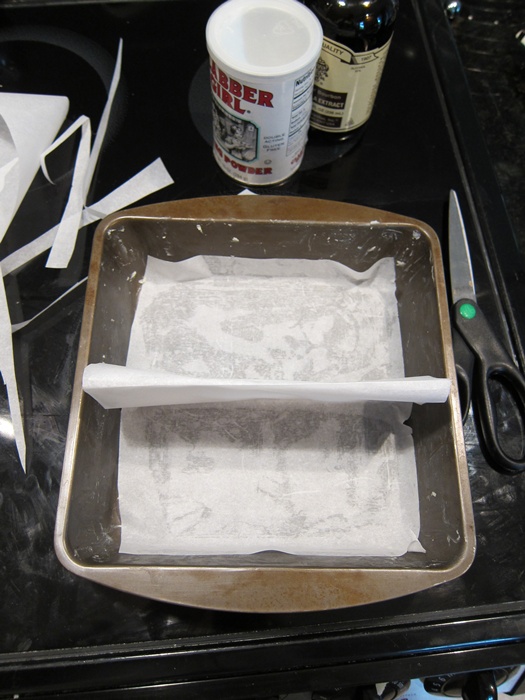
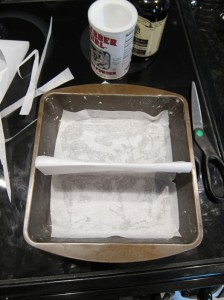
Grease the bottom and sides of the pan, and then press the parchment down onto the butter with the foil divider in the center of the pan. This worked way better than I expected.
Set the pan aside and preheat the oven to 350 degrees. Stir the cocoa powder into the milk and set aside.

In a medium bowl, sift together the flour and baking powder, sifting 3 times to ensure they’re well sifted and free of lumps.

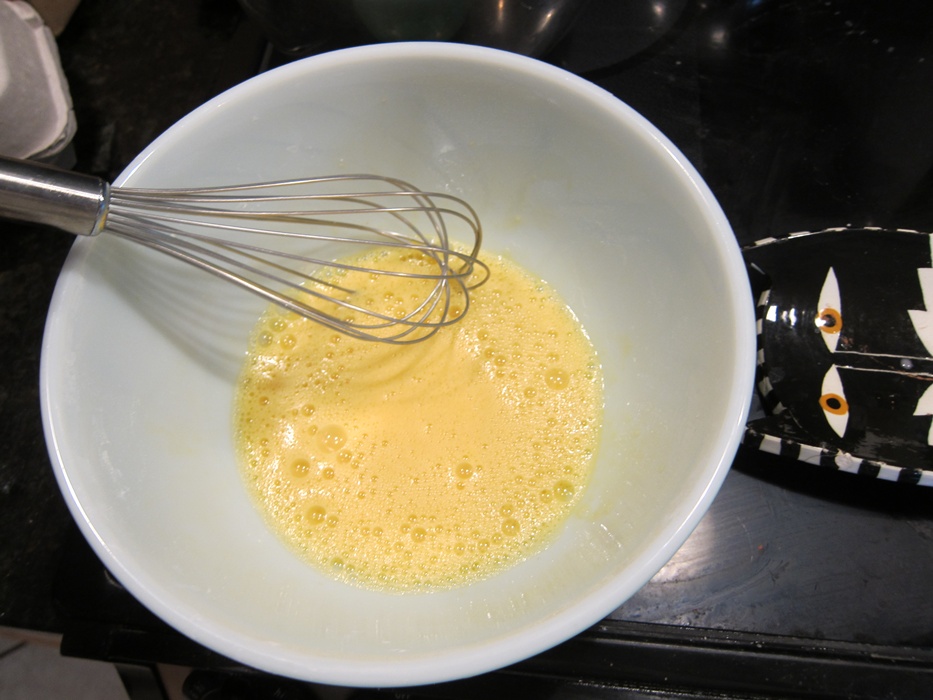
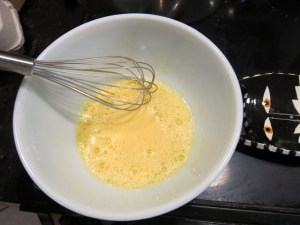
In another medium bowl, beat the eggs and vanilla until frothy.
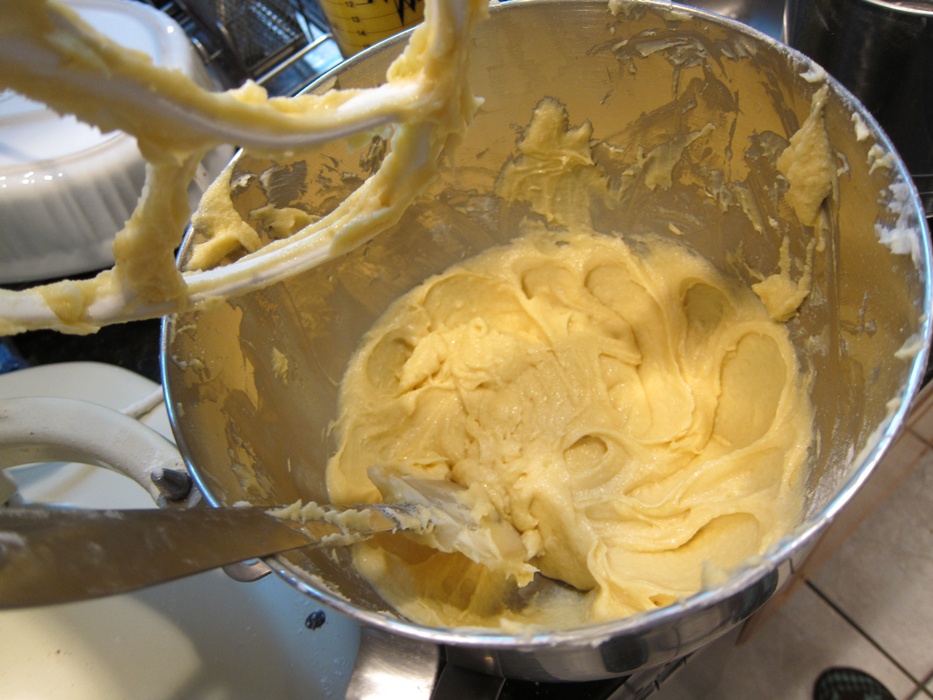
In a large bowl, beat the butter until smooth and shiny. Beat in the powdered sugar in 3 additions, beating after each. Add the egg mixture in three batches next, again beating after each. Add the flour mixture and beat until just combined.

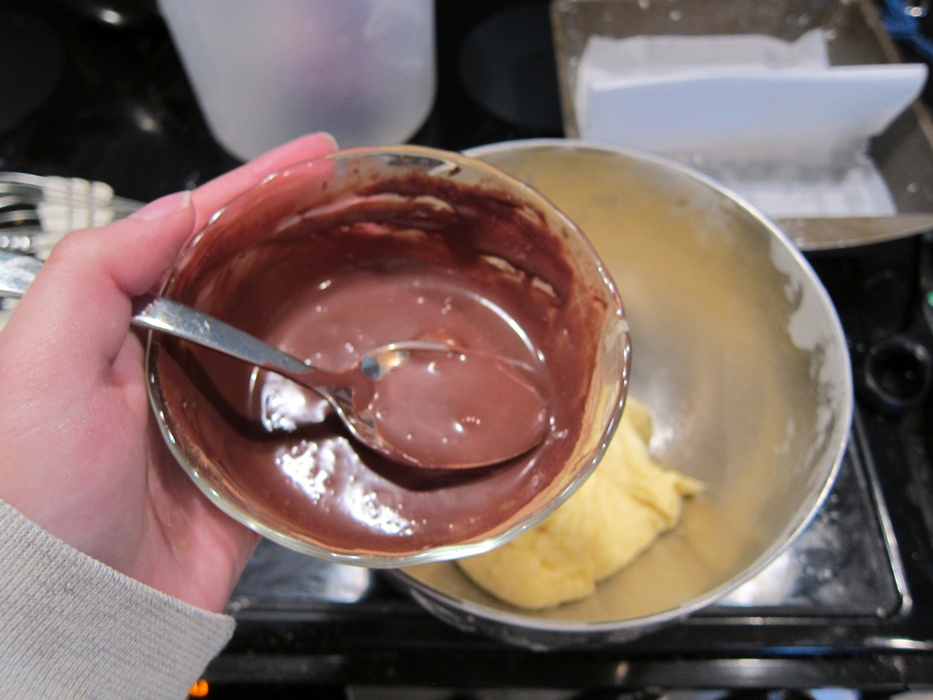
Divide the batter as evenly as you can into two bowls. Transfer two tablespoons of batter from one bowl to the other. Beat the cocoa mixture into the bowl with the slightly less batter.
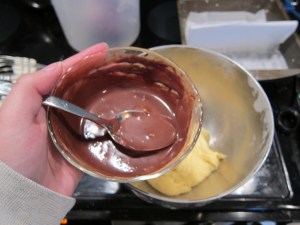
Let’s do this!

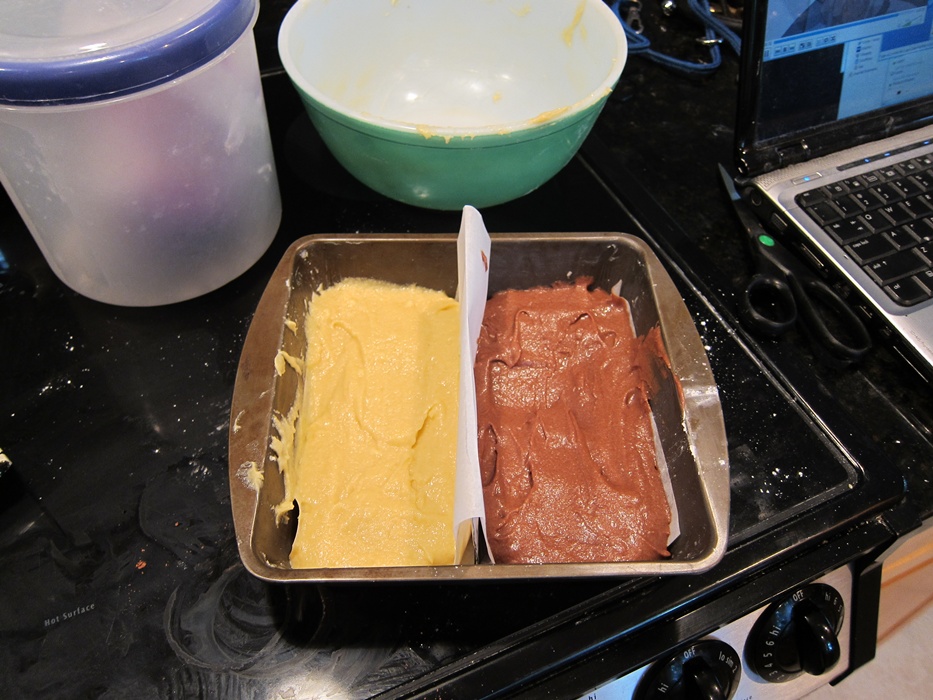
Spread the two batters in the cake pan, one on each side of the divider.
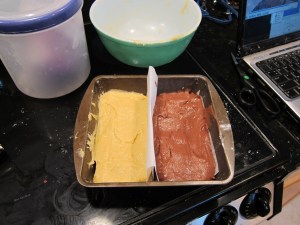
It’s a good idea to put a bit more batter on the outsides, so that they start off higher to offset if the cake domes in the center. That way you don’t have to cut off much to make even cake squares later. I wish I had done this a bit more.

Bake 25 – 30 minutes, until a toothpick inserted in the center comes out clean.
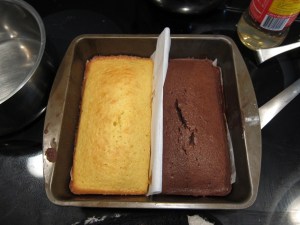
Let cool in the pan for 10 minutes, then remove to a wire rack to cool completely.

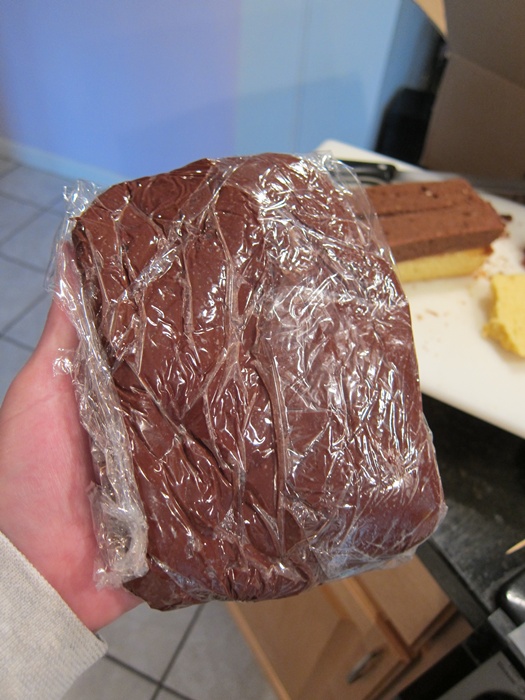
To make the chocolate plastique, melt the chocolate in the microwave or a double boiler. Remove from the heat and let cool slightly. Stir in the corn syrup and stir until it comes together in a mass, away from the sides of the bowl. Pour onto greased saran wrap and chill in the refrigerator for at least two hours until firm.
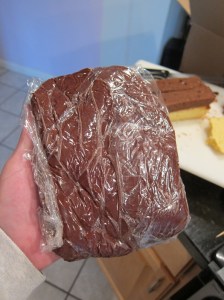
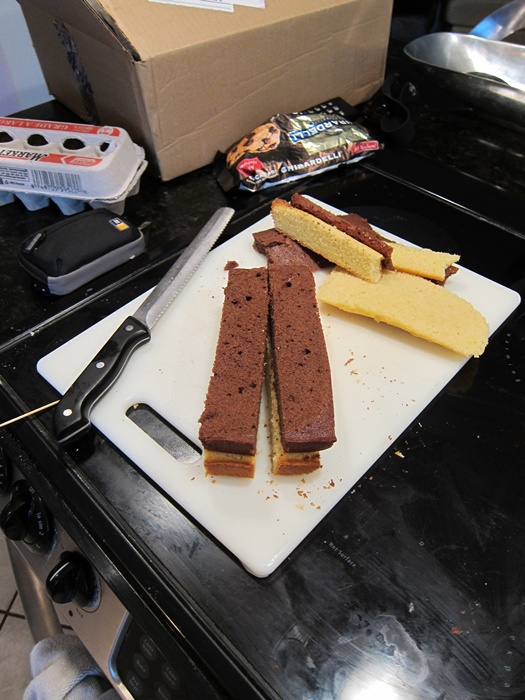
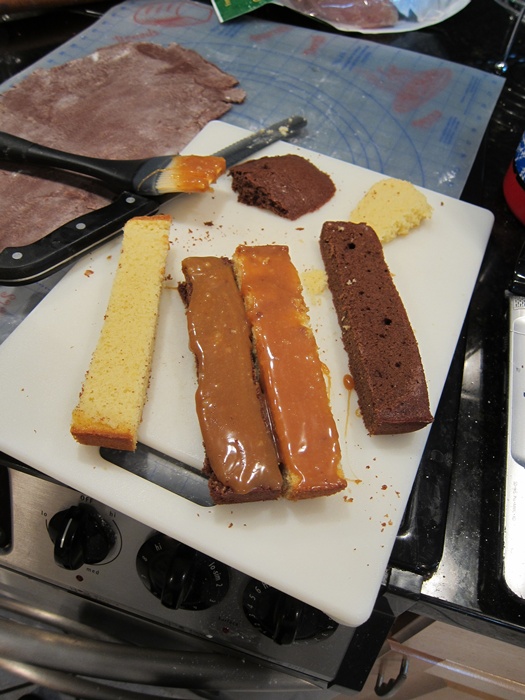
When the cake has cooled and the chocolate is almost done chilling, level the top of the cakes, then stack them and even out the sides. Cut them in half, lengthwise.
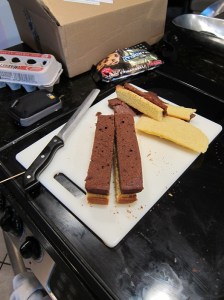
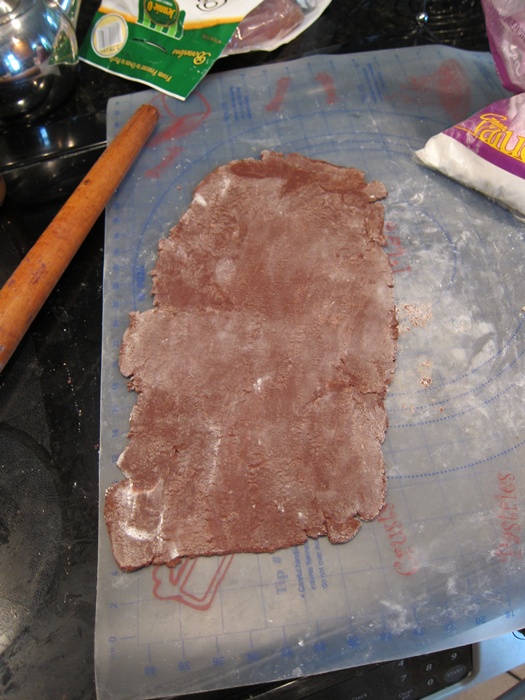
Set the cake aside and take out the chocolate plastique. Knead until pliable, then roll out to about 1/8″ thick. “Flour” with powdered sugar as necessary. Mine never got super pliable, but I beat it into submission with a rolling pin.
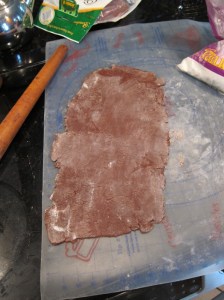
Roll until it’s as wide as the cakes are long, and long enough to wrap around the cakes.

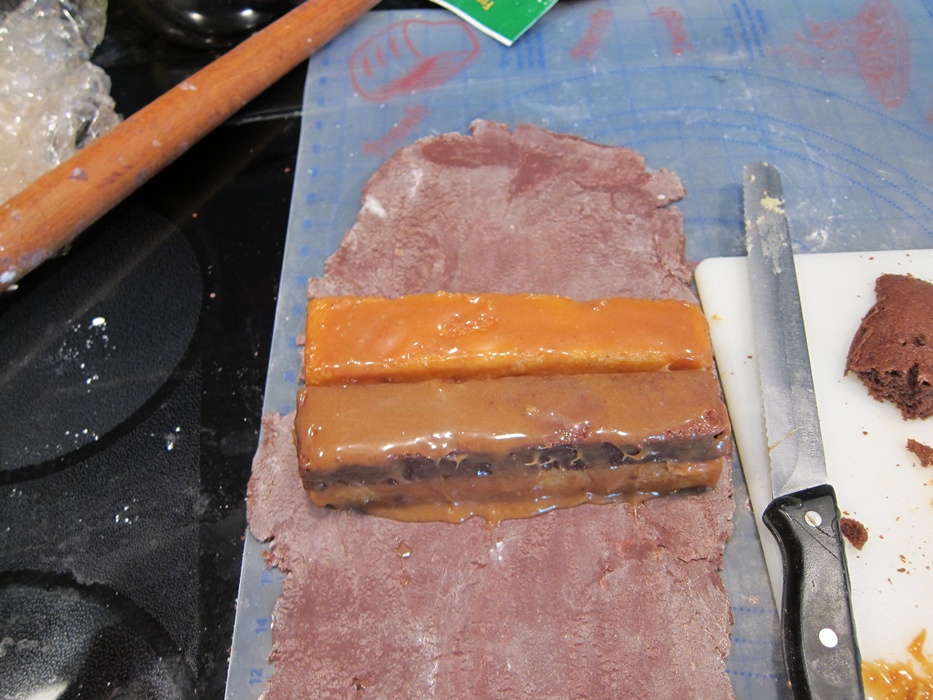
Put one vanilla and one chocolate piece of cake next to each other and brush their tops with caramel sauce.
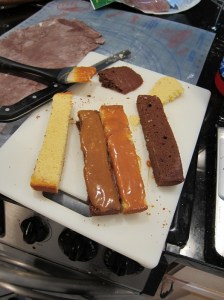
Place the alternate flavor cake slice on top of each, then coat the sides where the two stacks touch each other with caramel sauce. Coat all the outside surfaces with caramel sauce also, then place top-side down on the rolled out chocolate.
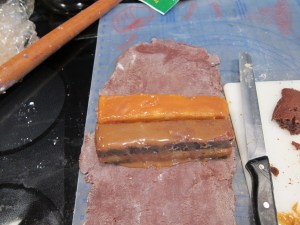
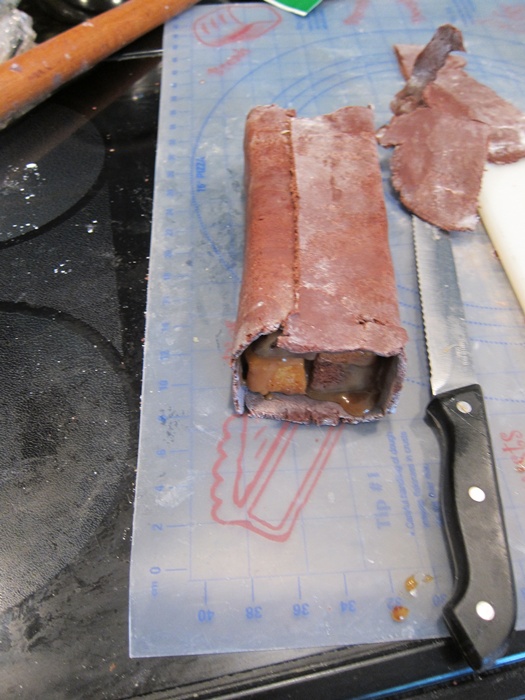
Gently fold the chocolate up around the cake, squaring off the edges with your fingers. Fold the chocolate over the top, cutting off any overlap.
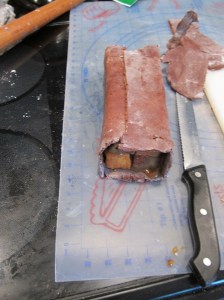
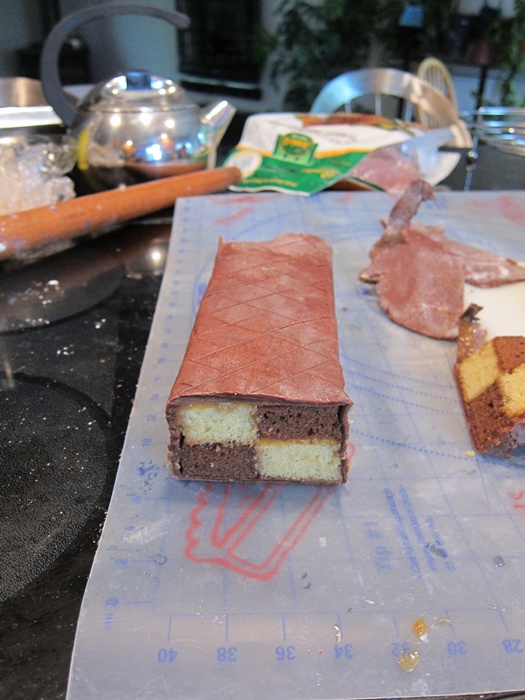
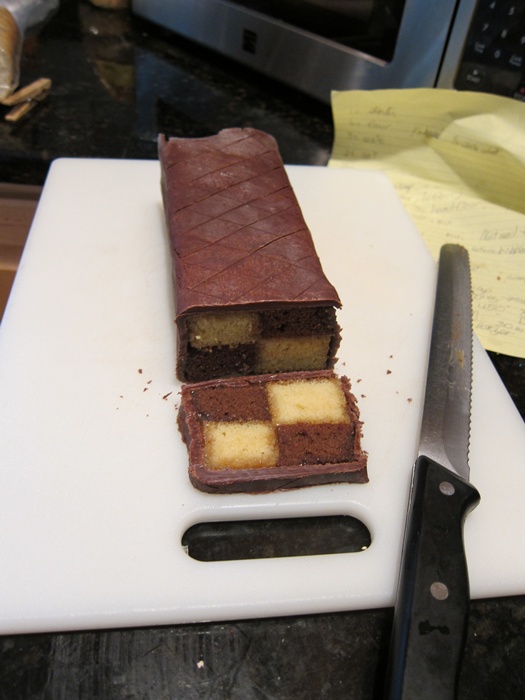
Gently press the seam closed, then invert the cake. If desired, make a checkerboard pattern in the chocolate by running the back of a knife over it. I was able to press pretty firmly without the cake collapsing. Cut off the end to reveal the patterned cake.
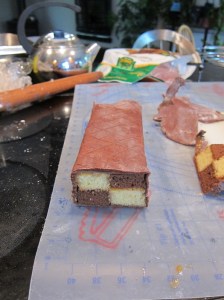
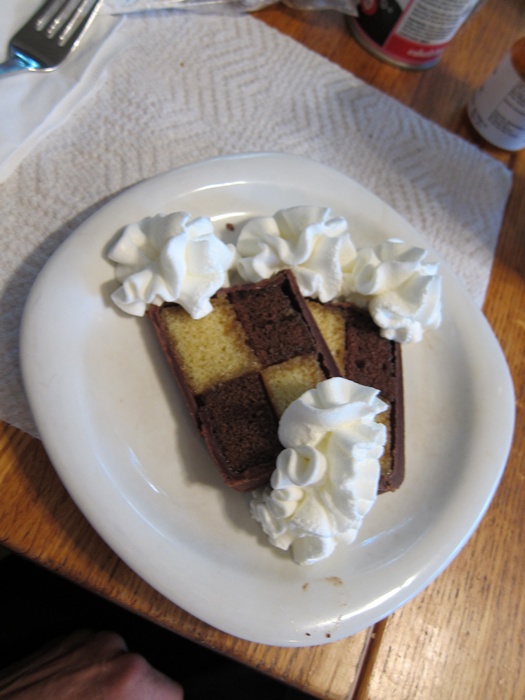
And that’s it! You’ve made a pretty awesome looking cake! Nice work.
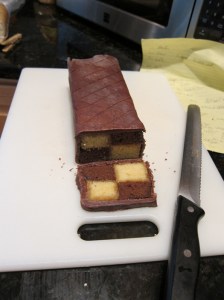
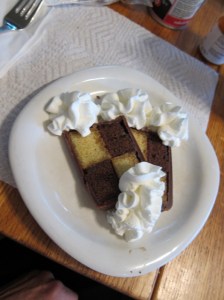
I fully support this flavor combination!
Battenberg Cake

Cake:

  • 1 cup all-purpose flour
  • 1 1/2 sticks butter, at room temperature
  • 1 1/4 cups powdered sugar
  • 1 teaspoon vanilla extract
  • 3 eggs, at room temperature
  • 1 3/4 teaspoons baking powder
  • 2 tablespoons cocoa powder, sifted
  • 1-2 tablespoons milk

Chocolate Plastique:

  • 7 ounces semisweet chocolate
  • 2 tablespoon light corn syrup
  • caramel sauce

To recreate a Battenberg cake pan, first fold a piece of foil so that it’s several layers thick, 2-3 inches tall, and wide enough to divide an 8X8″ square pan. Fold parchment paper in a W around the foil, cutting the parchment so that it’s the width of the pan, and long enough to cover the bottom on each side of the foil divider. Grease the bottom and sides of the pan, and then press the parchment down onto the butter with the foil divider in the center of the pan.

Set the pan aside and preheat the oven to 350 degrees. Stir the cocoa powder into the milk and set aside.

In a medium bowl, sift together the flour and baking powder, sifting 3 times to ensure they’re well sifted and free of lumps.

In another medium bowl, beat the eggs and vanilla until frothy.

In a large bowl, beat the butter until smooth and shiny. Beat in the powdered sugar in 3 additions, beating after each. Add the egg mixture in three batches next, again beating after each. Add the flour mixture and beat until just combined.

Divide the batter as evenly as you can into two bowls. Transfer two tablespoons of batter from one bowl to the other. Beat the cocoa mixture into the bowl with the slightly less batter.

Spread the two batters in the cake pan, one on each side of the divider, spooning the batter slightly higher at the ends. Bake 25 – 30 minutes, until a toothpick inserted in the center comes out clean. Let cool in the pan for 10 minutes, then remove to a wire rack to cool completely.

To make the chocolate plastique, melt the chocolate in the microwave or a double boiler. Remove from the heat and let cool slightly. Stir in the corn syrup and stir until it comes together in a mass, away from the sides of the bowl. Pour onto greased saran wrap and chill in the refrigerator for at least two hours until firm.

When the cake has cooled and the chocolate is almost done chilling, level the top of the cakes, then stack them and even out the sides. Cut them in half, lengthwise.

Set the cake aside and take out the chocolate plastique. Knead until pliable, then roll out to about 1/8″ thick. “Flour” with powdered sugar as necessary. Roll until it’s as wide as the cakes are long, and long enough to wrap around the cakes.

Put one vanilla and one chocolate piece of cake next to each other and brush their tops with caramel sauce. Place the alternate flavor cake slice on top of each, then coat the sides where the two stacks touch each other with caramel sauce. Coat all the outside surfaces with caramel sauce also, then place top-side down on the rolled out chocolate.

Gently fold the chocolate up around the cake, squaring off the edges with your fingers. Fold the chocolate over the top, cutting off any overlap. Gently press the seam closed, then invert the cake. If desired, make a checkerboard pattern in the chocolate by running the back of a knife over it. Cut off the end to reveal the patterned cake.

Posted in Dessert | Tagged , , | 4 Comments

Buttermilk Cake with Chocolate Frosting

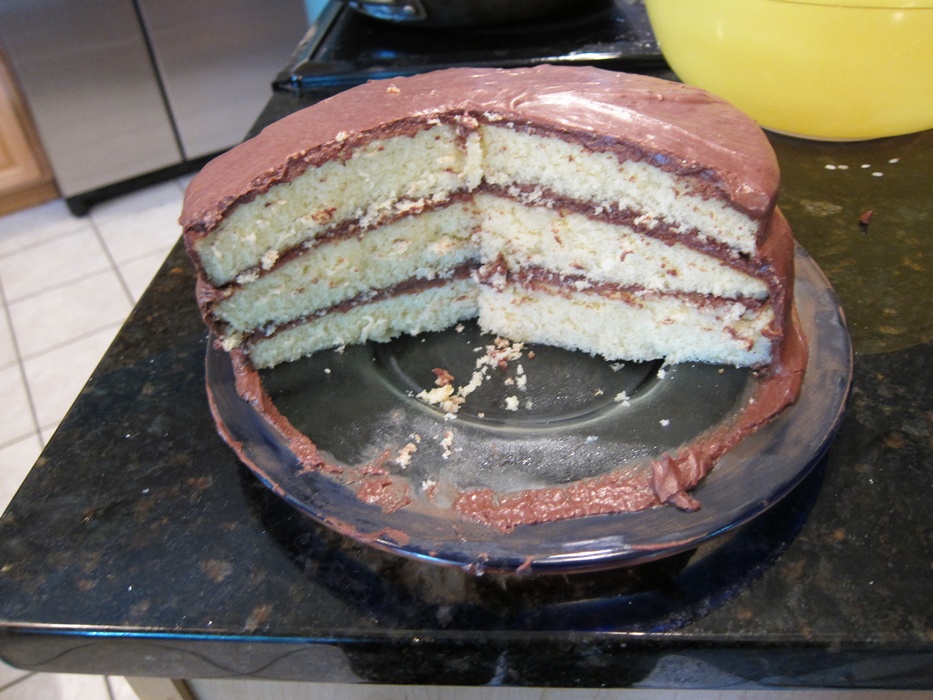
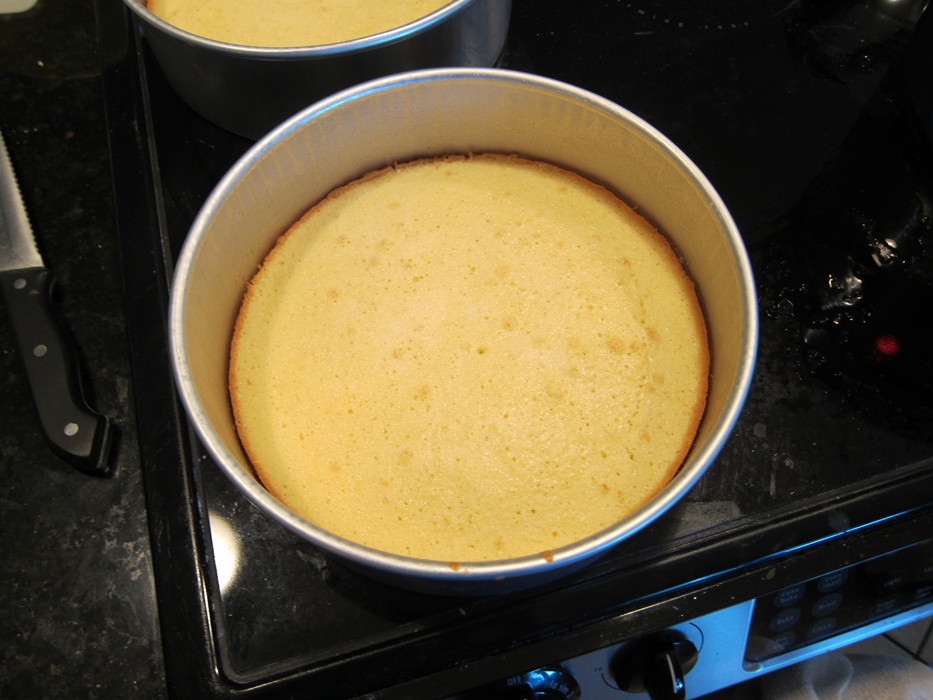
Okay, it’s…another cake! This one’s a three layer cake. As it turns out, my third pan isn’t quite the same size as the other two, so it’s a lumpy three layer cake! Ah well…

Ingredients:

Cake:

  • 4 whole eggs
  • 2 egg yolks
  • 2 teaspoons vanilla extract
  • 1 1/4 cups buttermilk
  • 3 cups cake flour
  • 2 cups sugar
  • 4 1/2 teaspoons baking powder
  • 1/2 teaspoon salt
  • 2 sticks unsalted butter, at room temperature

Frosting:

  • 2/3 cup unsweetened cocoa powder
  • 6 tablespoons boiling water
  • 1 stick of unsalted butter, at room temperature, cut into pieces
  • 3 3/4 cups powdered sugar
  • 1 teaspoon pure vanilla extract
  • pinch of kosher salt

Preheat the oven to 350 degrees. Grease three 9″ cake pans and line with parchment. Set pans aside

In a medium bowl, whisk together the eggs, yolks, vanilla, and 1/4 cup of the buttermilk.

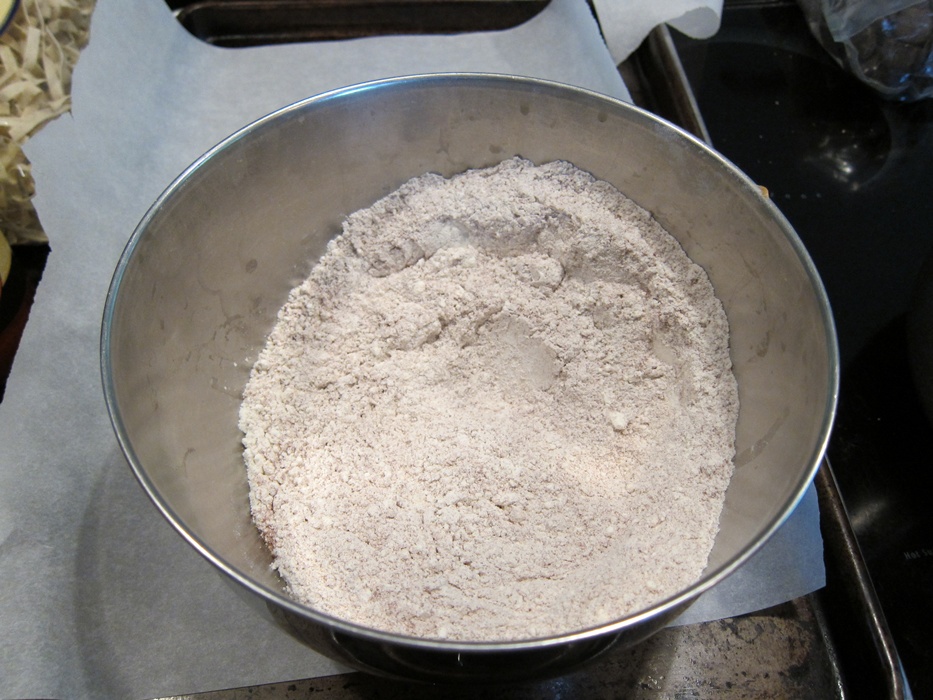
In a large bowl, whisk together the flour, sugar, baking powder, and salt. Add the butter and remaining cup of buttermilk and blend on low, until the dry goods are moistened, then raise to medium speed and beat until light and fluffy.

blerp

Add the egg mixture in three additions, beating well and scraping down the bowl after each addition.

Divide the batter among the three pans and bake 23-28 minutes, or until a toothpick inserted in the center of one of the cakes comes out clean.

Let the cakes cool completely in the pans, then prepare the frosting.

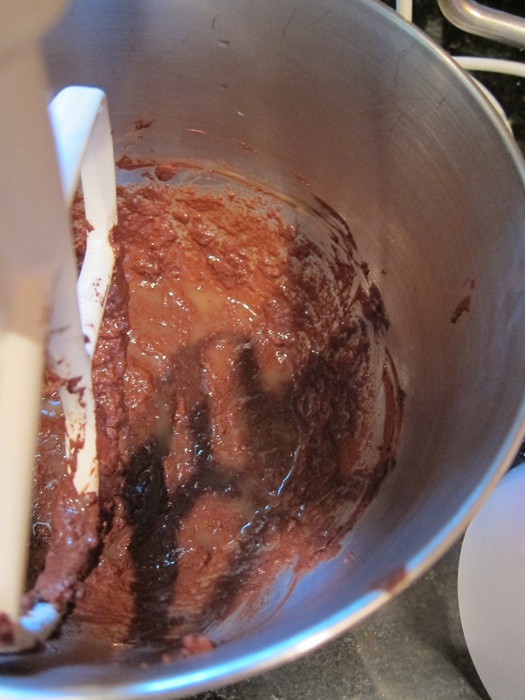
Place the cocoa powder in a large bowl and pour the boiling water over it. Stir together until the cocoa is completely moistened, then add the butter. Beat on low speed until smooth.

This doesn’t actually look that smooth, just looks kinda gross…

Add the vanilla and salt and mix for an additional 30 seconds. Beat in the powdered sugar a cup at a time, scraping the bowl between each addition. After the last 3/4 cup, beat another 2 minutes until the frosting gets light and fluffy.

At this point, it’s still not a super thick frosting. Spread a thin layer over the bottom cake and top with the second cake. Spread another thin layer over the second cake and top with the third. Now you can do what I’m just going to call the “Dump and Slump.” Spoon/spatula the remaining frosting onto the top cake later in the middle, and just let it run down slowly down the sides. You can nudge it a bit if one area’s getting hogging all the frosting.

The pan for the middle cake was just enough bigger to look ridiculous.

Slice, and serve!

The cake’s not as tangy as I thought it might be, being a buttermilk cake, but it was good. People seemed even more excited about the frosting than the cake, though.

Buttermilk Cake With Chocolate Frosting

Adapted from Lick The Bowl Good and Dozen Flours.

Cake:

  • 4 whole eggs
  • 2 egg yolks
  • 2 teaspoons vanilla extract
  • 1 1/4 cups buttermilk
  • 3 cups cake flour
  • 2 cups sugar
  • 4 1/2 teaspoons baking powder
  • 1/2 teaspoon salt
  • 2 sticks unsalted butter, at room temperature

Frosting:

  • 2/3 cup unsweetened cocoa powder
  • 6 tablespoons boiling water
  • 1 stick of unsalted butter, at room temperature, cut into pieces
  • 3 3/4 cups powdered sugar
  • 1 teaspoon pure vanilla extract
  • pinch of kosher salt

Preheat the oven to 350 degrees. Grease three 9″ cake pans and line with parchment. Set pans aside

In a medium bowl, whisk together the eggs, yolks, vanilla, and 1/4 cup of the buttermilk.

In a large bowl, whisk together the flour, sugar, baking powder, and salt. Add the butter and remaining cup of buttermilk and blend on low, until the dry goods are moistened, then raise to medium speed and beat until light and fluffy.Add the egg mixture in three additions, beating well and scraping down the bowl after each addition. Divide the batter among the three pans and bake 23-28 minutes, or until a toothpick inserted in the center of one of the cakes comes out clean. Let the cakes cool completely in the pans.

To prepare the frosting, place the cocoa powder in a large bowl and pour the boiling water over it. Stir together until the cocoa is completely moistened, then add the butter. Beat on low speed until smooth. Add the vanilla and salt and mix for an additional 30 seconds. Beat in the powdered sugar a cup at a time, scraping the bowl between each addition. After the last 3/4 cup, beat another 2 minutes until the frosting gets light and fluffy.

Spread a thin layer of frosting over the first two layers of cake, then spoon the remaining frosting onto the top cake and let it spread out and down the sides, covering the cake.

Posted in Dessert | Tagged , | Leave a comment

Jazzed Up Peanut Butter Cookies

After the recipe I originally wanted to try Tuesday flopped, I did a rushed scan around the bookshelf for something that I had all the ingredients for to bring to floor hockey that night. I found a recipe for peanut butter cookies in the cookbook from Flour Bakery, and added Ovaltine and a bit of chocolate because… it is my way?

SO. MANY. COOKIES.

Ingredients:

  • 1 cup unsalted butter, at room temperature
  • 1 cup sugar
  • 1 cup packed dark brown sugar
  • 2 eggs
  • 1 teaspoon vanilla extract
  • 1 3/4 cups chunky peanut butter
  • 2 1/2 cups all-purpose flour
  • 1/3 cup Ovaltine powder
  • 1 teaspoon baking soda
  • 1 teaspoon kosher salt
  • bittersweet chocolate disks (or any other chocolate you like, preferably something larger than a chip)

What I used, available here or in Vermont.

In a medium bowl, stir together the flour, Ovaltine, baking soda, and salt. Set aside.

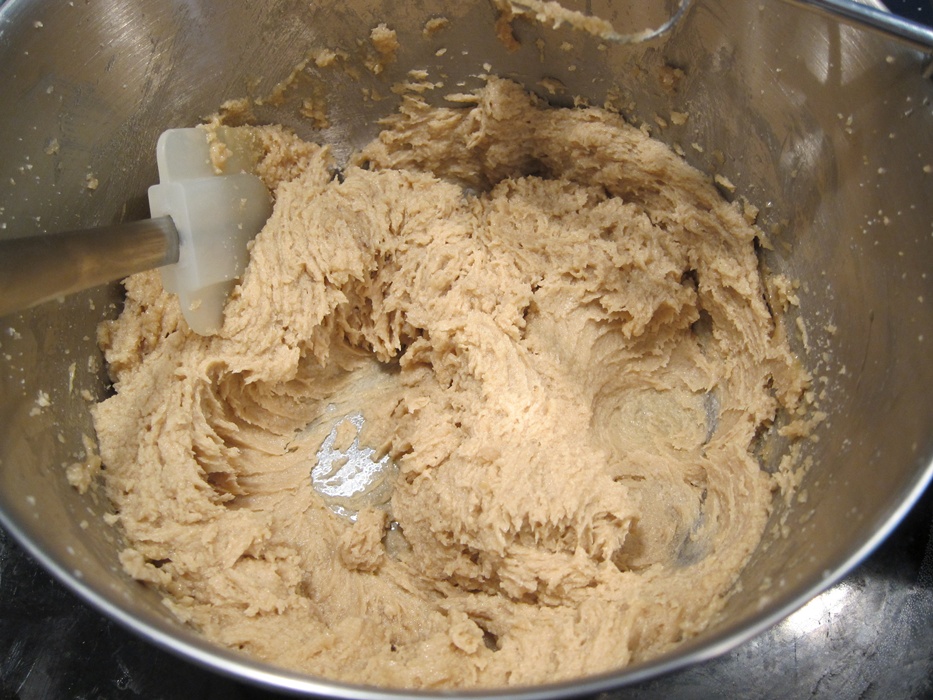
In a large bowl, cream the butter and both sugars until light and fluffy.

Almost willing to just eat that.

Add the eggs and vanilla and beat until well combined, 2-3 minutes.

Add the peanut butter and beat until well combined again, another 2 minutes.

Add the dry goods and beat in slowly until just mixed.

Cover your bowl, or transfer to a smaller bowl and then cover, and refrigerate at least 3 hours, up to a week.

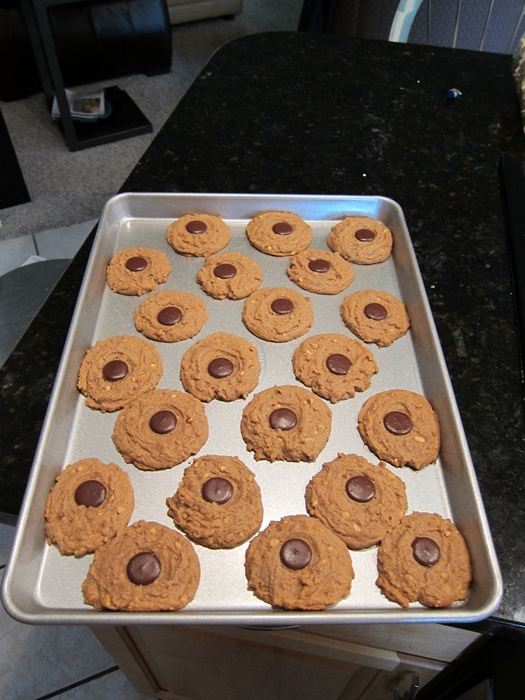
When the dough has chilled, preheat the oven to 350 degrees. Drop the dough in rounded tablespoons at least an inch apart on ungreased baking sheets. Press the chocolate discs into the top of the dough balls.

I think my camera had been sitting near the steam vent at the back of the oven too long. Oops!

Bake on the middle rack of the oven, one sheet at a time, for 14 minutes. The cookies will still seem pretty soft when they come out of the oven, but let them cool on the pan and they will firm up.

This made 66 cookies, which took three pans. I wouldn’t blame you if you wanted to halve the recipe, although halving thirds of a cup could be annoying (it’s a bit over 2 1/2 tablespoons). Anyway, these cookies are good enough that you might as well just make the full batch and pass them out to make friends!

The Ovaltine flavor’s barely noticeable, but I think adding it (and the chocolate discs) was a good move – I often find peanut butter cookies pretty boring, but I could eat these ones all day. They’re also better than many peanut butter cookies in that they’re not dry. All in all, not bad for a panic replacement recipe!

Peanut Butter Cookies

Adapted from Flour.

  • 1 cup unsalted butter, at room temperature
  • 1 cup sugar
  • 1 cup packed dark brown sugar
  • 2 eggs
  • 1 teaspoon vanilla extract
  • 1 3/4 cups chunky peanut butter
  • 2 1/2 cups all-purpose flour
  • 1/3 cup Ovaltine powder
  • 1 teaspoon baking soda
  • 1 teaspoon kosher salt
  • bittersweet chocolate disks (or any other chocolate you like, preferably something larger than a chip)

In a medium bowl, stir together the flour, Ovaltine, baking soda, and salt. Set aside.

In a large bowl, cream the butter and both sugars until light and fluffy. Add the eggs and vanilla and beat until well combined, 2-3 minutes. Add the peanut butter and beat until well combined again, another 2 minutes. Add the dry goods and beat in slowly until just mixed. Cover your bowl, or transfer to a smaller bowl and then cover, and refrigerate at least 3 hours, up to a week.

When the dough has chilled, preheat the oven to 350 degrees. Drop the dough in rounded tablespoons at least an inch apart on ungreased baking sheets. Press the chocolate discs into the top of the dough balls.

Bake on the middle rack of the oven, one sheet at a time, for 14 minutes. Let cool on pans until firm.

Posted in Dessert | Tagged , , | Leave a comment

Polenta Bread

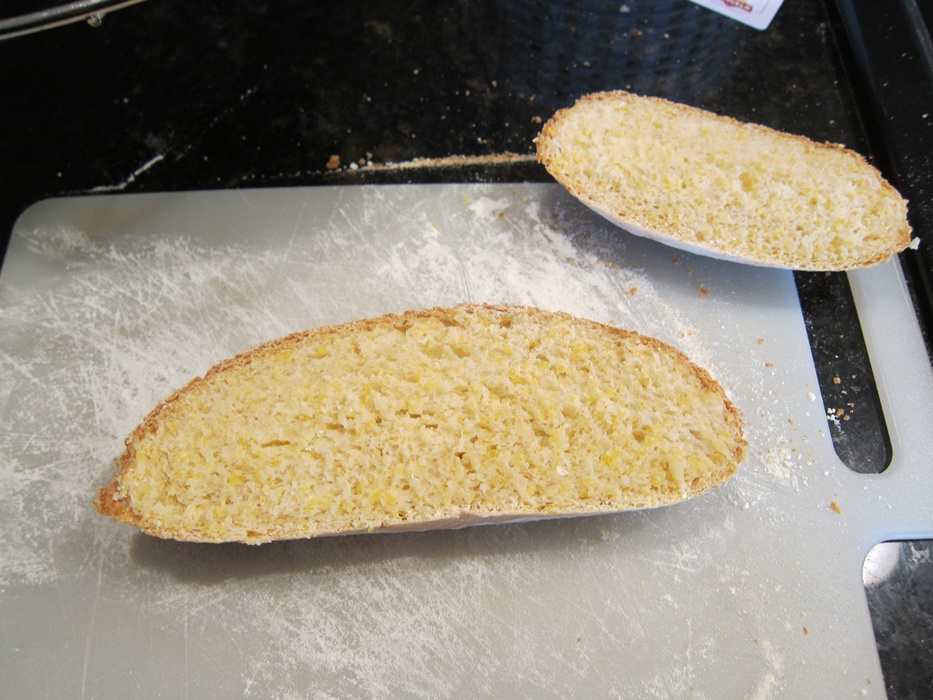
Another new bread I’m awful fond of! This bread has the texture of healthy, blah, multigrain type bread, in that there are little bits in it, but a great firm  crust and a nice lightly corn flavor. It’s really super delicious!

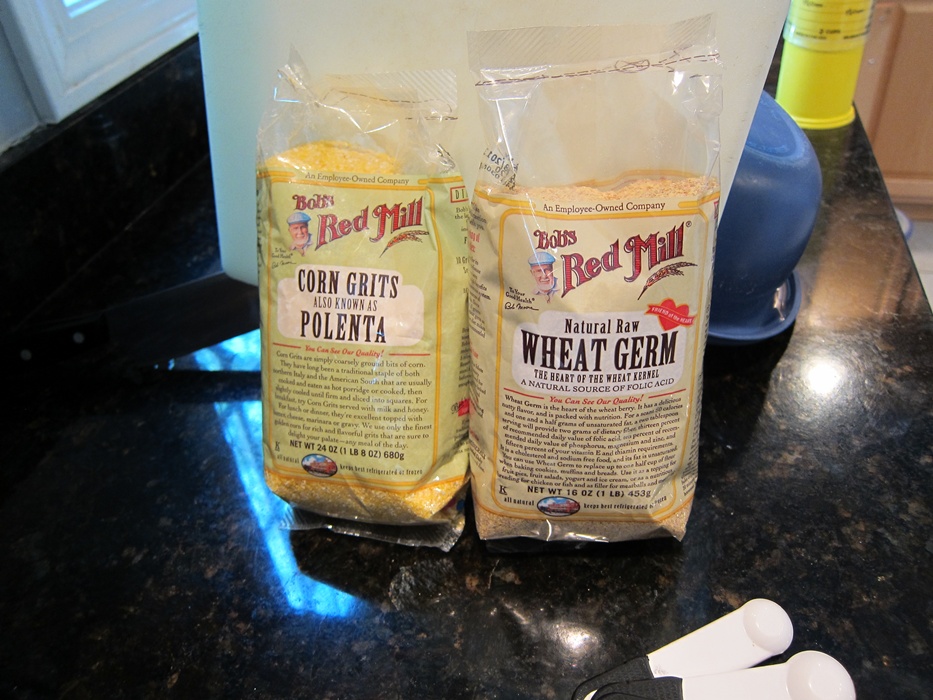
Not where the supermarket clerk thought they’d be.

Ingredients:

Starter:

  • 1 1/4 teaspoons active dry yeast
  • 1/2 cup cold tap water
  • scant cup unbleached all-purpose flour

Dough:

  • 1 cup cold tap water
  • 2/3 cup polenta
  • 2 1/2 cups unbleached all-purpose flour
  • 2 teaspoons salt
  • 2 tablespoons wheat germ, lightly toasted
  • 2 cups water, for steam

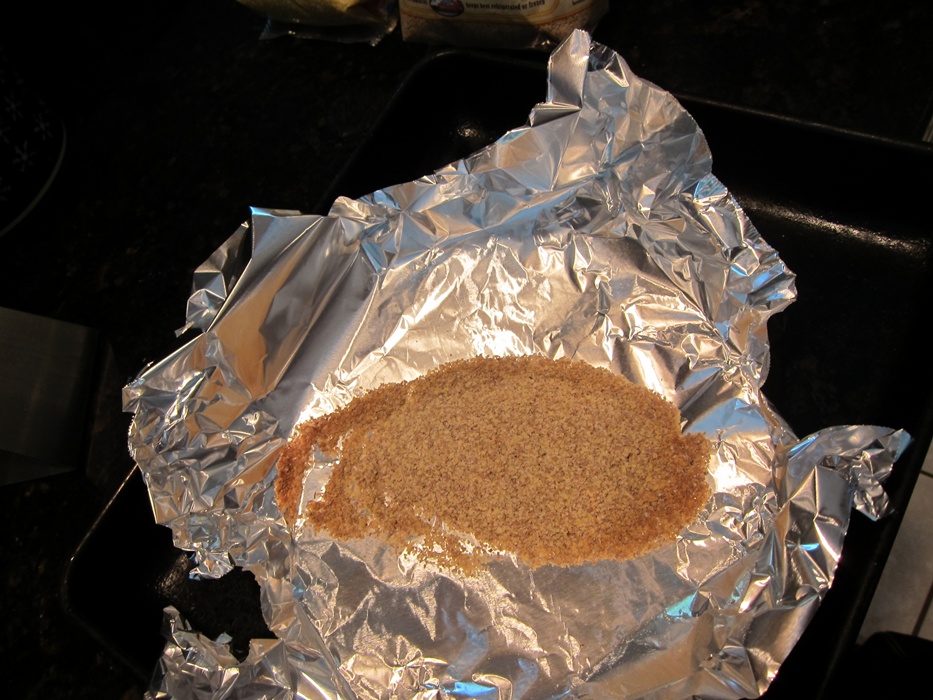
For toasting the wheat germ, I just put it on some foil on a pan and put it in the toaster oven. I don’t think it took more than 4 minutes, and keep an eye on it because it burns fast. (I had to chuck my first batch, because I thought that the toaster’s “light” setting would be light enough!)

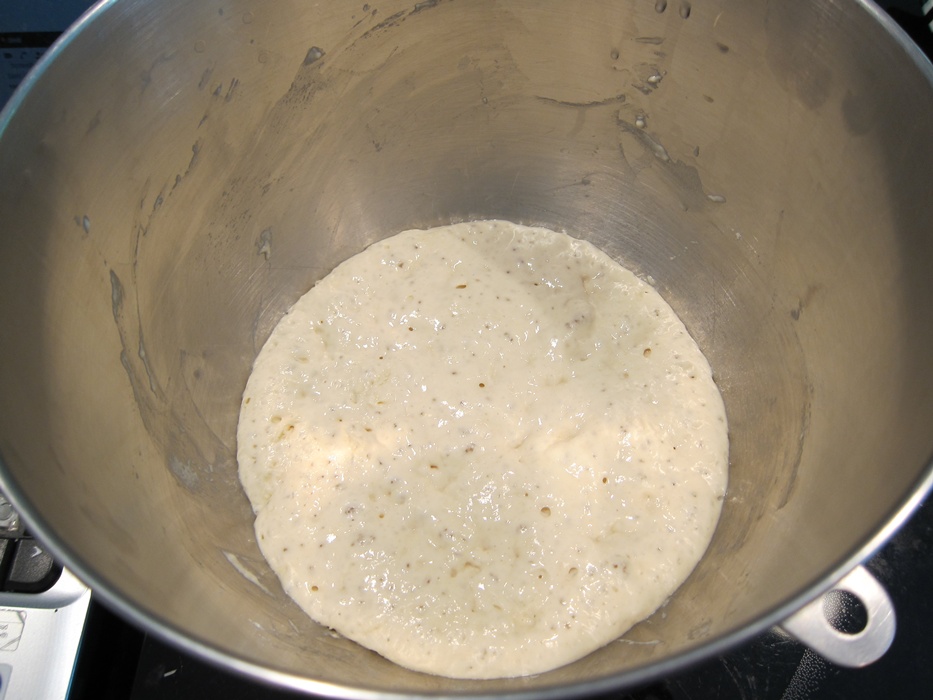
To make the starter, sprinkle the yeast over the water in your stand mixer bowl. After the yeast has started to dissolve and become active, about 5 minutes, add the flour and stir in. Cover and let sit at room temperature until the surface is covered in bubbles, about 3 hours.

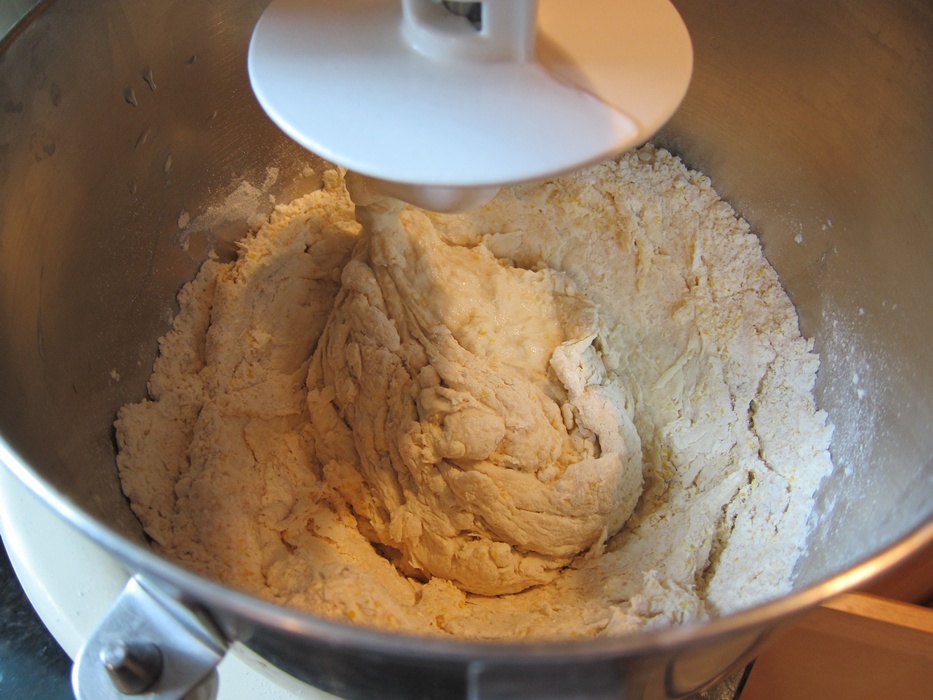
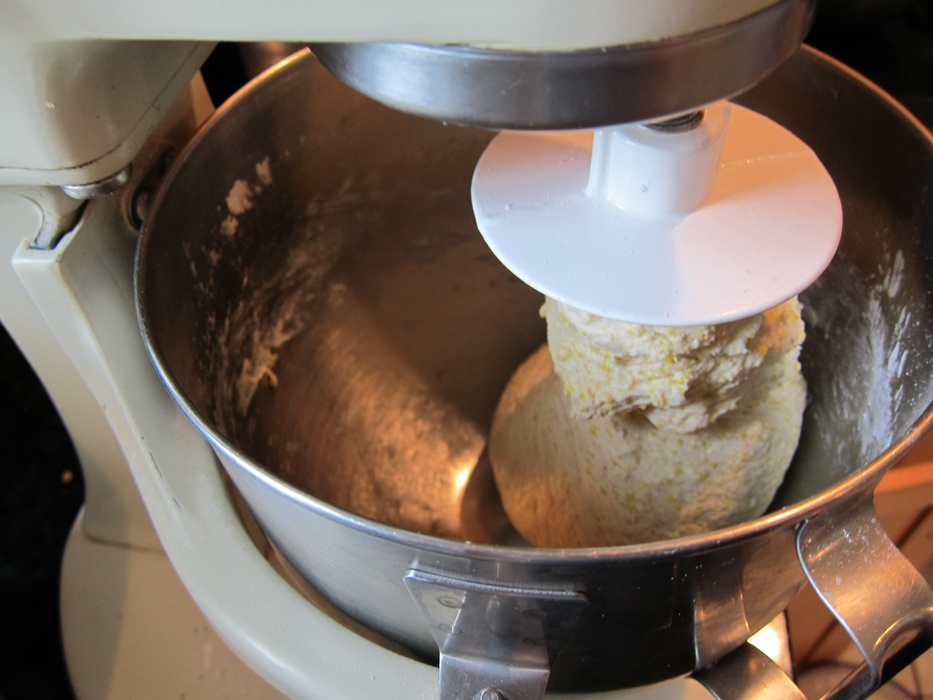
When the starter is ready, add the remaining ingredients (not including the 2 cups of water) and stir to combine.

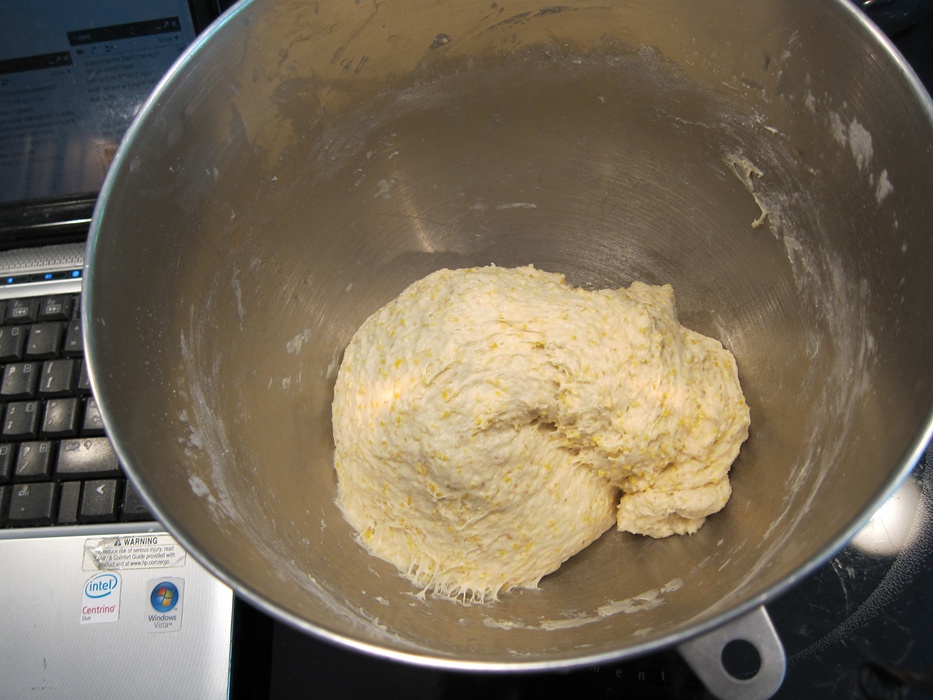
Knead for about 10 minutes, until the dough comes away from the sides of the bowl. If that isn’t happening by the end of the 10 minutes, add flour a tablespoon at a time until it does.

Cover the bowl and let the dough rise until doubled, about 2 hours.

(pre-rise)

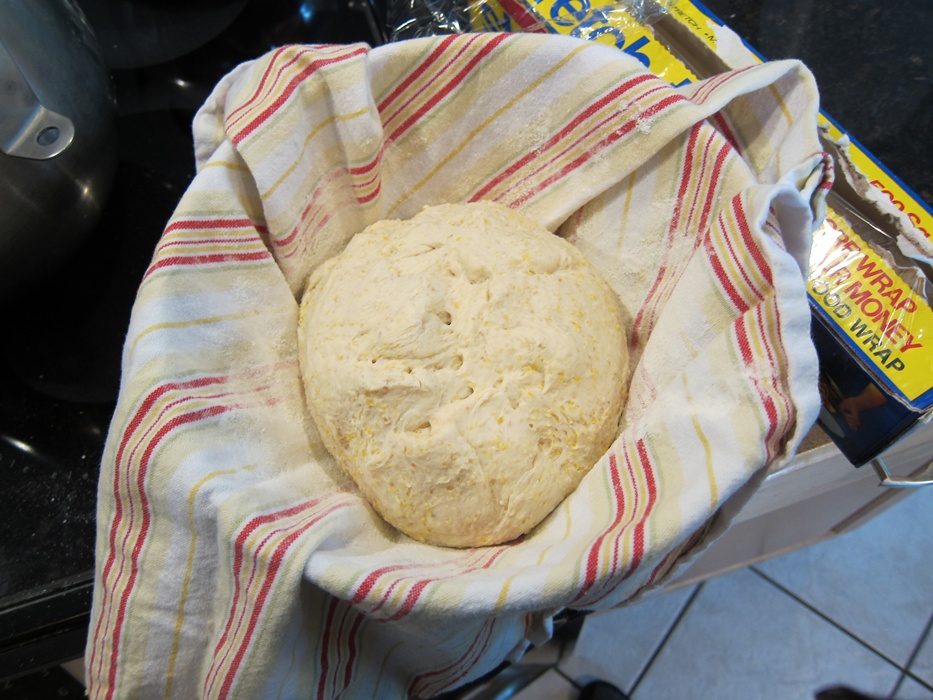
Line a medium sized bowl or basket with a clean kitchen towel and sprinkle with flour. Knead the risen dough briefly to knock down, then shape the dough into a ball. The best way to do this is to hold the big lump in one hand, and with the other hand gently grasp the top and pull it down to the bottom. Turn the dough 90 degrees and repeat 3 times, until you’ve pulled down the dough on all four sides, giving a smooth firm outer surface. Put your dough ball in the lined basket with the rough side, where the dough you’ve pulled down comes together, on the top.

The seams smooth out a good deal while it rises.

Gently fold the ends of the towel over the dough. Cover the bowl and let the dough rise until doubled, about an hour and a half this time.
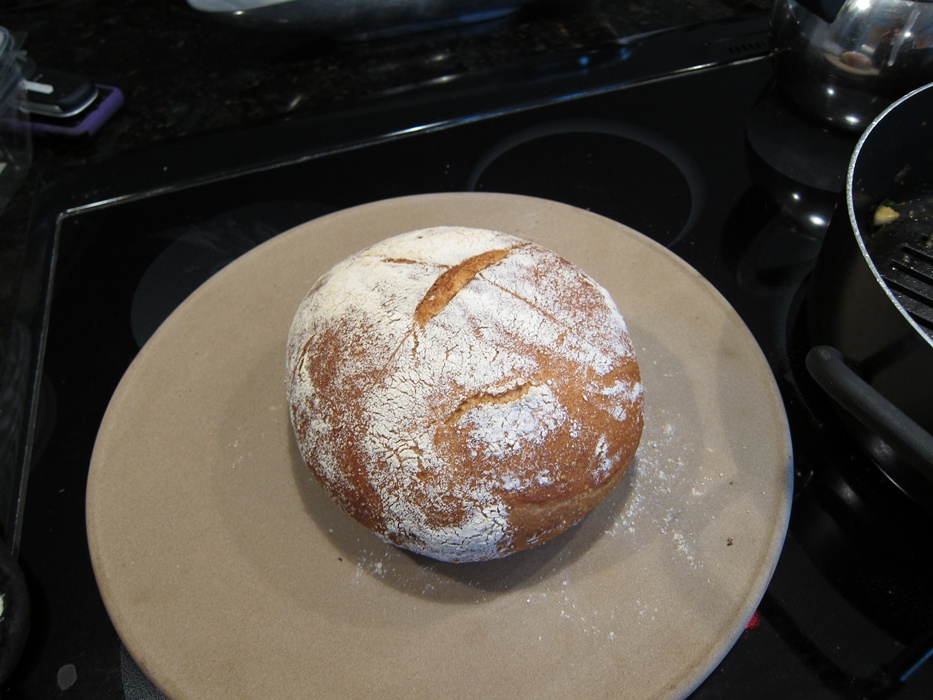
While the dough does its final rise, put an empty baking pan on the bottom rack of your oven. It’s good to have one pan set aside for this, because it does eventually damage the bottom of the pan. Put a pizza stone on the middle rack of the oven, and preheat the oven to 425 degrees. Boil two cups of water on the stove.
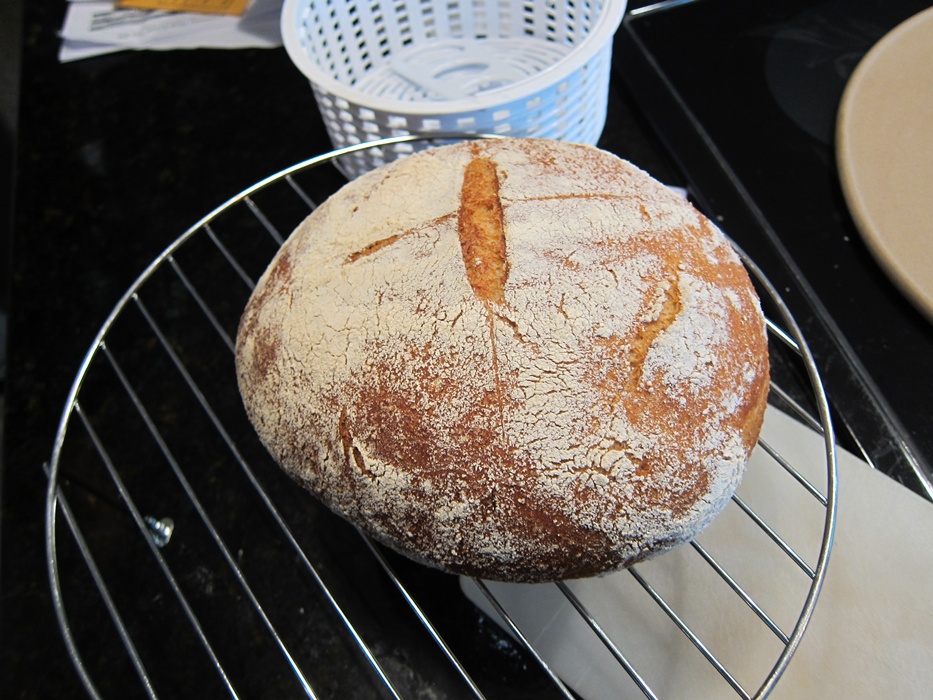
Flour a baker’s peel (or a plate with low sides, if you don’t have one), and turn the risen dough onto it, flipping (gently) out of the basket so the seam-side is down. Score the top of the dough (in an X or any other simple pattern you desire) with a razor or sharp knife. Slide the dough quickly from the peel onto the preheated pizza stone. Pour the boiling water onto the pan on the bottom rack, being careful not to get burned by steam. Bake until well browned, and hollow sounding when tapped, 45-50 minutes. Cool on a rack.

Quickly all that was left!

This one is definitely worth checking out! I’ll be making it again, and submitting it to yeastspotting.

Polenta Bread

From Bread and Chocolate by Fran Gage.

Starter:

  • 1 1/4 teaspoons active dry yeast
  • 1/2 cup cold tap water
  • scant cup unbleached all-purpose flour

Dough:

  • 1 cup cold tap water
  • 2/3 cup polenta
  • 2 1/2 cups unbleached all-purpose flour
  • 2 teaspoons salt
  • 2 tablespoons wheat germ, lightly toasted
  • 2 cups water, for steam

To make the starter, sprinkle the yeast over the water in your stand mixer bowl. After the yeast has started to dissolve and become active, about 5 minutes, add the flour and stir in. Cover and let sit at room temperature until the surface is covered in bubbles, about 3 hours.

When the starter is ready, add the remaining ingredients (not including the 2 cups of water) and stir to combine. Knead for about 10 minutes, until the dough comes away from the sides of the bowl. Add additional flour a tablespoon at a time if necessary. Cover the bowl and let the dough rise until doubled, about 2 hours. Line a medium sized bowl or basket with a clean kitchen towel and sprinkle with flour. Knead the risen dough briefly to knock down, then shape the dough into a ball.  Put your dough ball in the lined basket seam-side up. Gently fold the towel over the dough. Cover the bowl and let the dough rise until doubled, about an hour and a half.

While the dough does its final rise, put an empty baking pan on the bottom rack of your oven. Put a pizza stone on the middle rack of the oven, and preheat the oven to 425 degrees. Boil two cups of water on the stove.

Flour a baker’s peel and turn the risen dough onto it, flipping (gently) out of the basket so the seam-side is down. Score the top of the dough with a razor or sharp knife. Slide the dough quickly from the peel onto the preheated pizza stone. Pour the boiling water onto the pan on the bottom rack, being careful not to get burned by steam. Bake until well browned, and hollow sounding when tapped, 45-50 minutes. Cool on a rack.

Posted in Bread | Tagged , | 6 Comments

Peking Savory Fried Cornish Hens

Until last week, I’d never had Cornish hen. I was pretty excited to find an excuse to cook a whole little flock of them! This recipe has several steps (marinating, steaming, then frying), but you can do most of the work early, refrigerate the partially cooked birds, and then fry them when you’re ready to eat if that works better with your day.

The flock, thawing.

This recipe gets a bit messy, when you get to the frying part. Might not be a bad idea to line your counter with some newspaper or something. (Just don’t get the paper too close to the stove burner!)

Ingredients:

  • 4 Cornish hens, split in half
  • 3 tablespoons soy sauce
  • 2 tablespoons Chinese rice wine or sake or dry sherry
  • 8 slices ginger root
  • 4 green onions, cut into a few pieces each
  • 1/2 teaspoon black peppercorns or 1/4 teaspoon ground black pepper
  • 12 Chinese dried lily buds (optional)
  • 1 cup cooking oil (canola or something similar)
  • coriander leaves for garnish (optional)

Optional Spices (use any you have, don’t bother buying the rest)

  • 1 teaspoon Szechuan peppercorns
  • 3 split black cardamom pods  or 1/4 teaspoon ground cardamom
  • 2 star anise or 1/4 teaspoon ground fennel or anise seed
  • 1 3 inch piece cinnamon bark or 1/4 teaspoon ground cinnamon
  • 6 cloves or 1/4 teaspoon ground cloves
  • 3 slices nutmeg seed or 1/4 teaspoon ground nutmeg or
  • 1 1/2 teaspoon five spice powder

First you’ve got to get those hens in half. You can use a knife, but my mom has poultry shears so I used those.

terrifying

Combine all the spices, soy sauce, and rice wine vinegar and stir well. Put the hen-halves in a large bag or bowl and pour the sauce over them, rotating to make sure all the birds get covered.

Marinate 1-2 hours at room temperature, or overnight in the refrigerator.

When ready to steam, if you have a steamer, awesome. If not, you can sort of get the same effect by putting a small heat-safe dish in the bottom of a large pot and balancing a bowl on top of that. Pour water in the bottom of the pot, and steam the hens, skin side up, in the bowl.

If you do have a steamer, get the biggest bowl you have that will fit in the steamer and put as many of the hens as you can get in it, skin side up, in the bowl, put the bowl in the steamer, and steam.

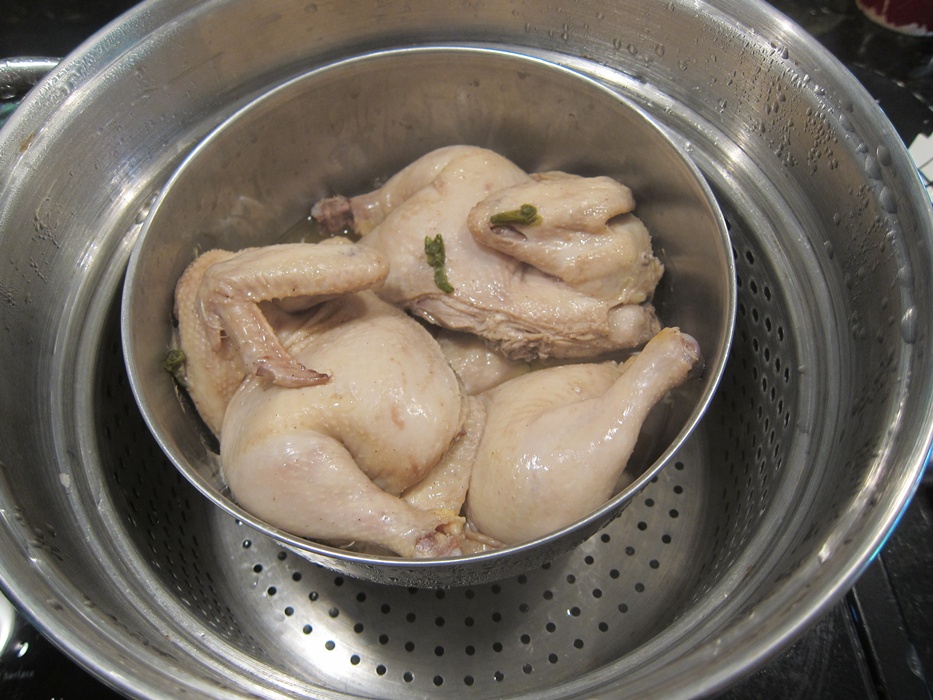
Either way, you’ll want to get the water to a boil, put in the bowl of hens, and reduce the heat until the water is simmering. Put the lid on your large pot, and steam the hens for 25 minutes.

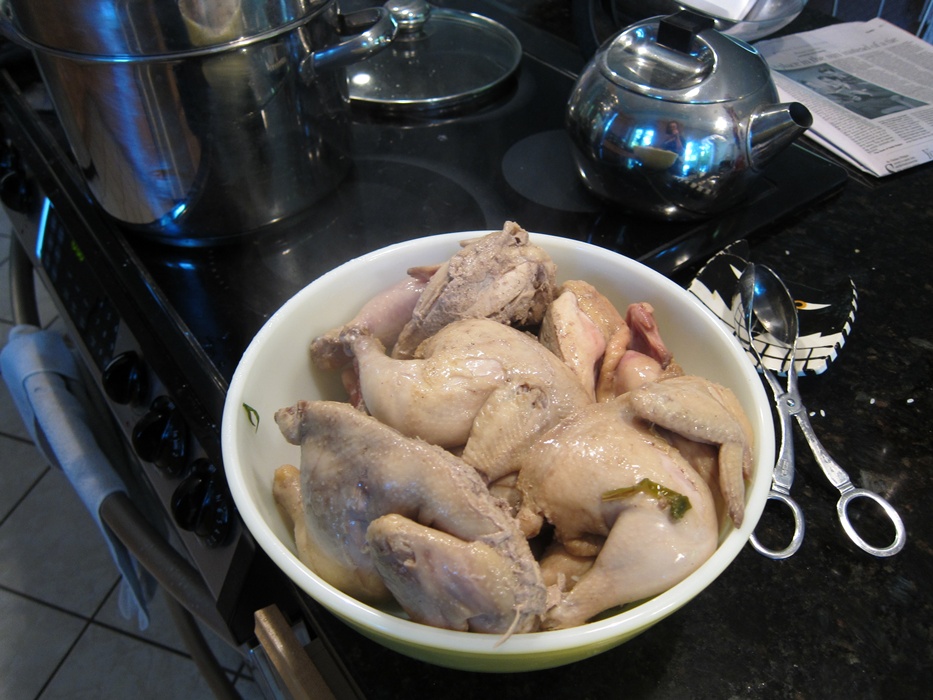
That’s half the hen-halves.

No longer looking raw. That’s a good thing.

Pour the liquid from the bowl into a small pot and simmer until reduced by about half. Skim any fat or chicken-scum from the surface of the liquid.

You can refrigerate the hens now (and the sauce you just reduced), or go straight to frying.

When you’re ready to fry, pick off any cinnamon sticks, star anise, pepper corns, or any other big chunks of spice that may be stuck to the hens, and discard.

Pour the oil into a skillet, ideally something with a large flat bottom and high sides, and heat on the stove. I found something around medium to be about right. When the oil is hot (flick a drop of water in it, and if it crackles like crazy, you’re set), add several of the pieces of hen, being careful not to get spattered too much by spitting oil. Cook, rotating several times so that all the skin gets crisped.

Cook the remaining parts and serve with the sauce you made from the liquid in the steaming bowl, and some rice and/or vegetables. Garnish with the coriander leaves, if desired.

Just kidding about the vegetables.

One hen turns out to be kind of a lot of food for one person, but it shouldn’t be a problem to find someone willing to eat a half for lunch the next day! These are nice and moist and have a crispy delicious skin from the frying. A good first attempt at Cornish hens!

Peking Savory Fried Cornish Hens

From Cookstr.

  • 4 Cornish hens, split in half
  • 3 tablespoons soy sauce
  • 2 tablespoons Chinese rice wine or sake or dry sherry
  • 8 slices ginger root
  • 4 green onions, cut into a few pieces each
  • 1/2 teaspoon black peppercorns or 1/4 teaspoon ground black pepper
  • 12 Chinese dried lily buds (optional)
  • 1 cup cooking oil (canola or something similar)
  • coriander leaves for garnish (optional)

Optional Spices (use any you have, don’t bother buying the rest):

  • 1 teaspoon Szechuan peppercorns
  • 3 split black cardamom pods  or 1/4 teaspoon ground cardamom
  • 2 star anise or 1/4 teaspoon ground fennel or anise seed
  • 1 3 inch piece cinnamon bark or 1/4 teaspoon ground cinnamon
  • 6 cloves or 1/4 teaspoon ground cloves
  • 3 slices nutmeg seed or 1/4 teaspoon ground nutmeg or
  • 1 1/2 teaspoon five spice powder

Combine all the spices, soy sauce, and rice wine vinegar and stir well. Put the hen-halves in a large bag or bowl and pour the sauce over them, rotating to make sure all the birds get covered. Marinate 1-2 hours at room temperature, or overnight in the refrigerator.

When ready to steam, put the largest bowl you have that will fit in the steamer in, and put as many of the hens in the bowl as you can fit skin side up. Pour an inch or two of water into the bottom of the steamer and bring to a boil over the stove. Reduce the heat to a simmer, cover, and steam the birds for 25 minutes, repeating with any hens that didn’t make it in the first time.

Pour the liquid from the bowl the hens are in into a small pot and simmer until reduced by about half. Skim any fat from the surface of the liquid.

You can refrigerate the hens now (and the sauce you just reduced), or go straight to frying.

When you’re ready to fry, pick off any cinnamon sticks, star anise, pepper corns, or any other big chunks of spice that may be stuck to the hens, and discard.

Pour the oil into a skillet, ideally something with a large flat bottom and high sides, and heat on the stove. I found something around medium to be about right. When the oil is hot add several of the pieces of hen. Cook, rotating several times so that all the skin gets crisped. Cook the remaining pieces, and serve with the reduced sauce and rice or vegetables. Garnish with coriander leaves if desired.

Posted in Dinner | Tagged , | Leave a comment

Apple Sugar

I mentioned a few days ago a new-to-me food blog I like a bunch, Kitchen Historic. Some friends I don’t see much of were coming over, so I wanted something super simple we could make, so that we could mostly just talk. This candy recipe is easy, and messy in a fun way, so it worked well for us!

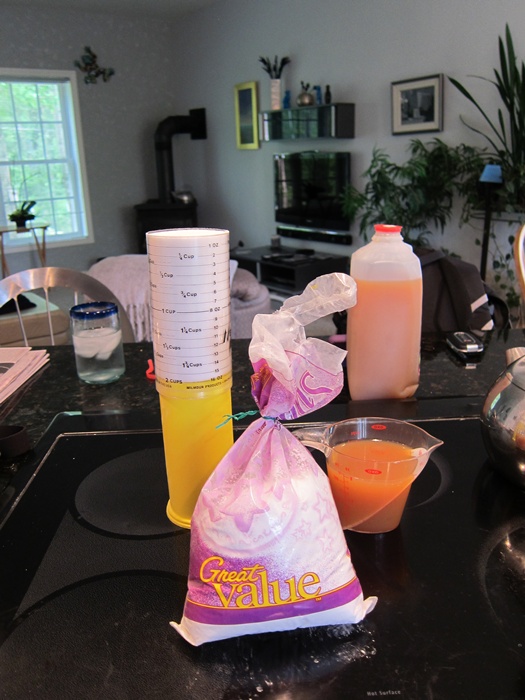
Reaaaal easy ingredient list!

Ingredients:

  • 1 cup apple cider
  • 2 cups sugar
  • powdered sugar for rolling

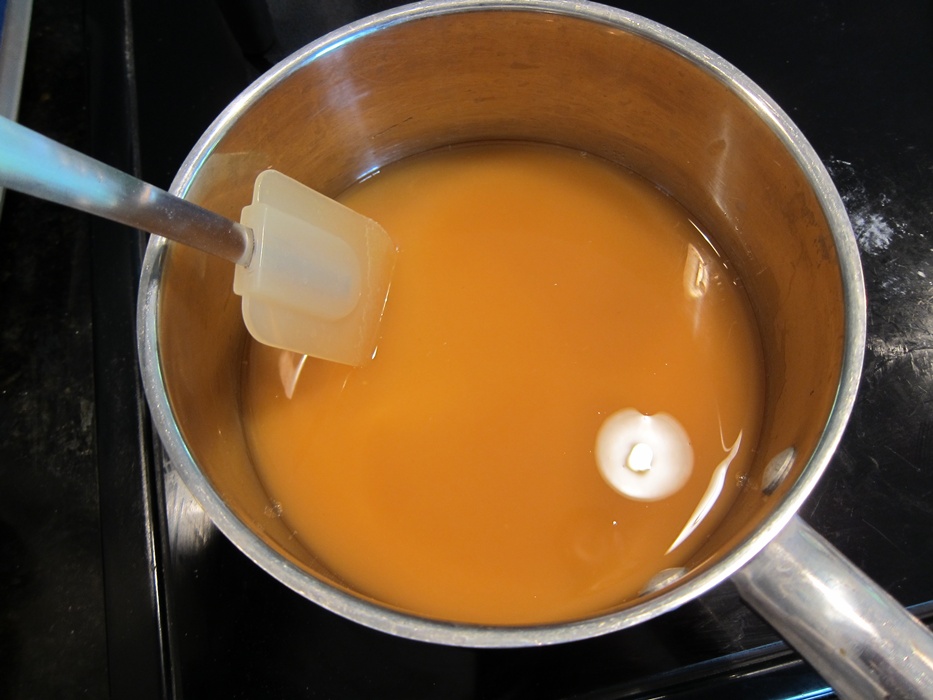
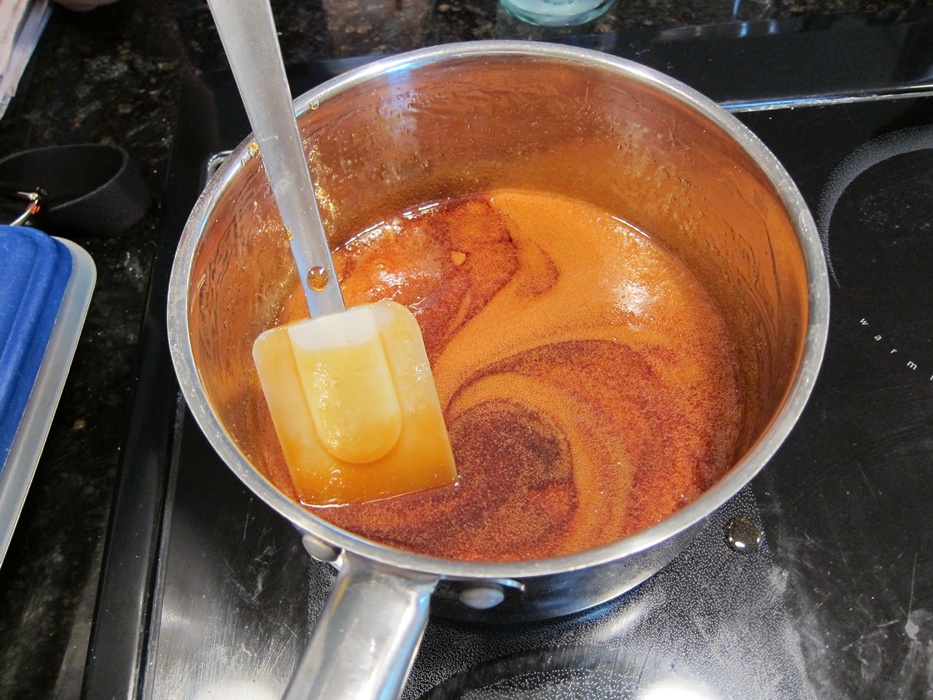
Combine the sugar and apple cider in a medium pot and put on the stove over medium heat.

Cook to hard crack stage, 300-310 degrees.

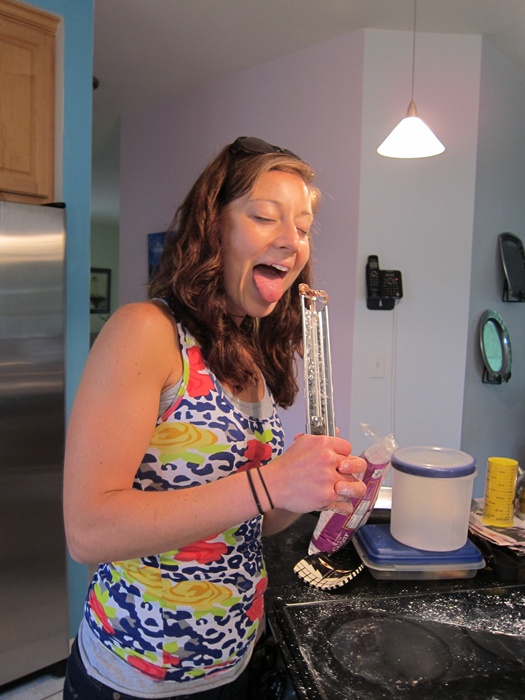
(That’s the thermometer, if you can’t tell.)

If you don’t have a candy thermometer, that means if you drop a tiny bit of it into cold water, the sugar should become hard and crack, and be difficult to mold with your fingers if you take it out of the water.

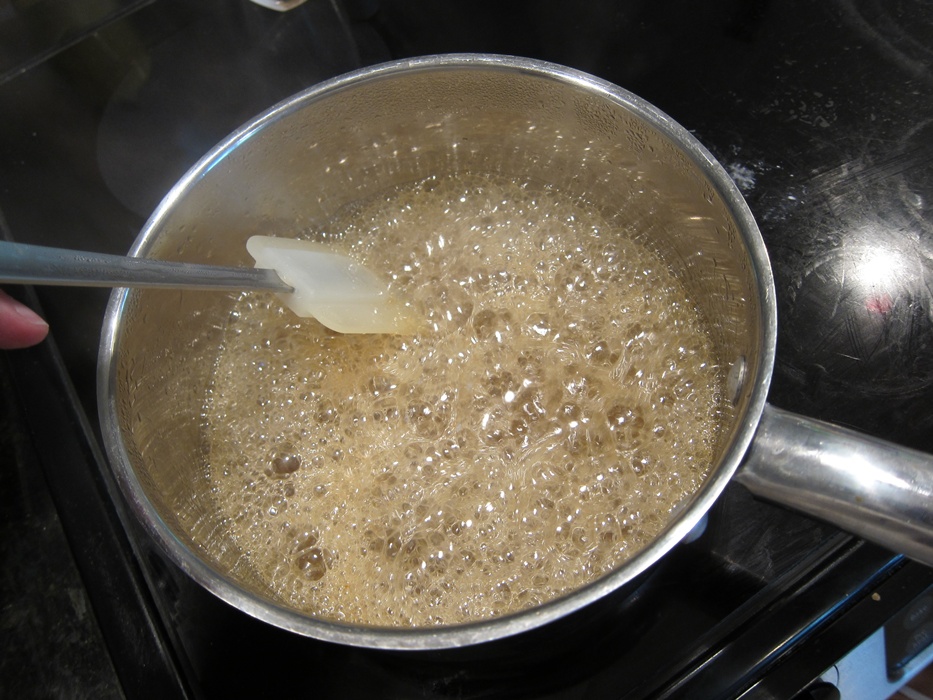
Getting there…

Stir, increasing frequently as it gets hotter. When it reaches 300 degrees, remove from the heat.

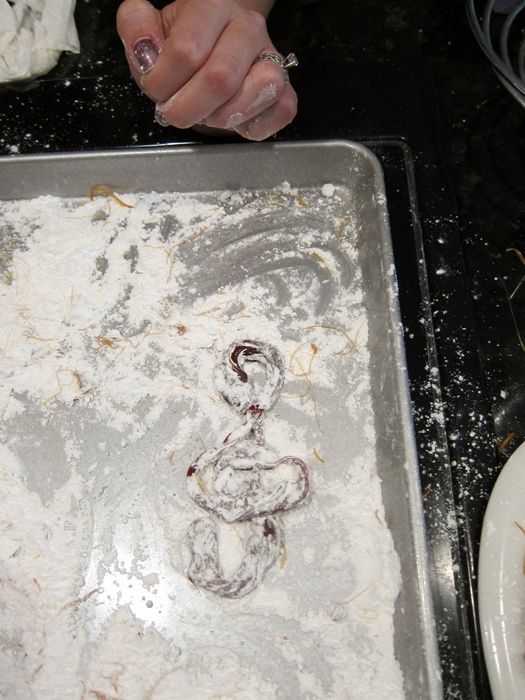
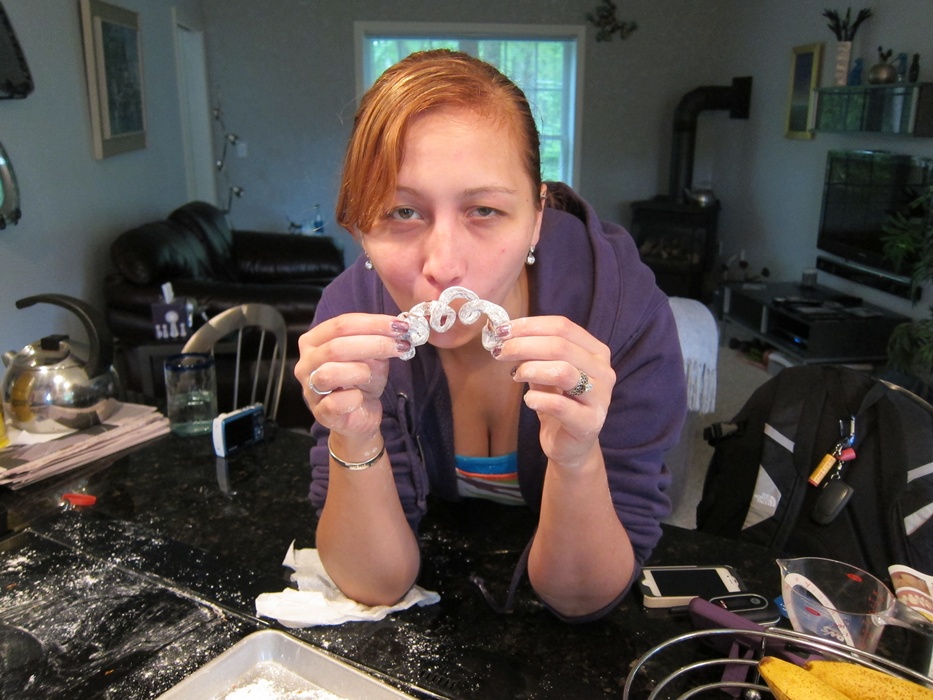
Sprinkle powdered sugar over a baking sheet. Wait for the caramel to cool just enough that you can touch it without burning yourself, then take spoonfuls of it and roll it out in the powdered sugar like playdough worms, then twist the worms to give them texture. Ours weren’t coming out looking as classy as the ones on Kitchen Historic, so we made some fun shapes!

Yay for candy, and for friends!

Apple Sugar

From Kitchen Historic.

  • 1 cup apple cider
  • 2 cups sugar
  • powdered sugar for rolling

Combine the sugar and apple cider in a medium pot and put on the stove over medium heat. Cook to hard crack stage, 300-310 degrees, stirring occasionally at first, frequently by the end.

Remove from the heat and set aside to cool until cool enough to handle. Sprinkle powdered sugar on a pan with walls while you wait.

Drop spoonfuls of the warm sugar mixture onto the powdered sugar and roll out into sticks. Gently twist the sticks, then set aside and roll out remaining caramel.

Posted in Dessert | Tagged , , | Leave a comment

Orange Sweet Rolls

My friend Danielle’s up in the north, visiting from NYC. She wanted to cook something with yeast, as it’s been giving her trouble at home. While making this we concluded she’s probably adding too much flour to doughs, which I’ve been working on not doing over the last year. We managed to avoid that here, and these sweet rolls came out delightfully!

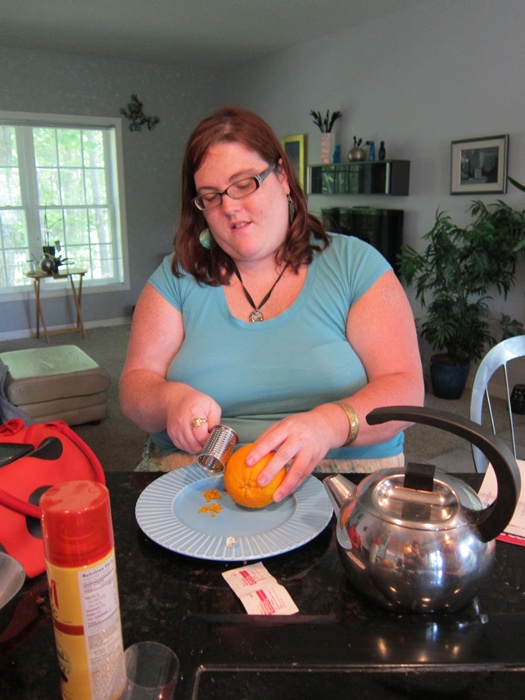
Didn’t have a zester, did have a cheese grater.

Ingredients:

Dough:

  •  3/4 cup buttermilk, warm
  • 6 tablespoons butter, melted and cooled
  • 3 large eggs
  • 4 1/4 cups flour
  • 1/4 cup sugar
  • 2 1/4 teaspoons or one package instant yeast
  • 1 1/4 teaspoons salt

Orange Filling:

  • 1/2 cup unsalted butter, room temperature
  • 1 cup sugar
  • 2 tablespoons freshly squeezed orange juice
  • grated orange rind/zest from two large oranges (reserving 1/2 teaspoon zest for the glaze below)

Orange Glaze:

  • 1 1/2 cups powdered sugar
  • 3 tablespoons freshly squeezed orange juice from about 1 orange
  • 1/2 teaspoon grated orange rind/zest reserved from the filling above

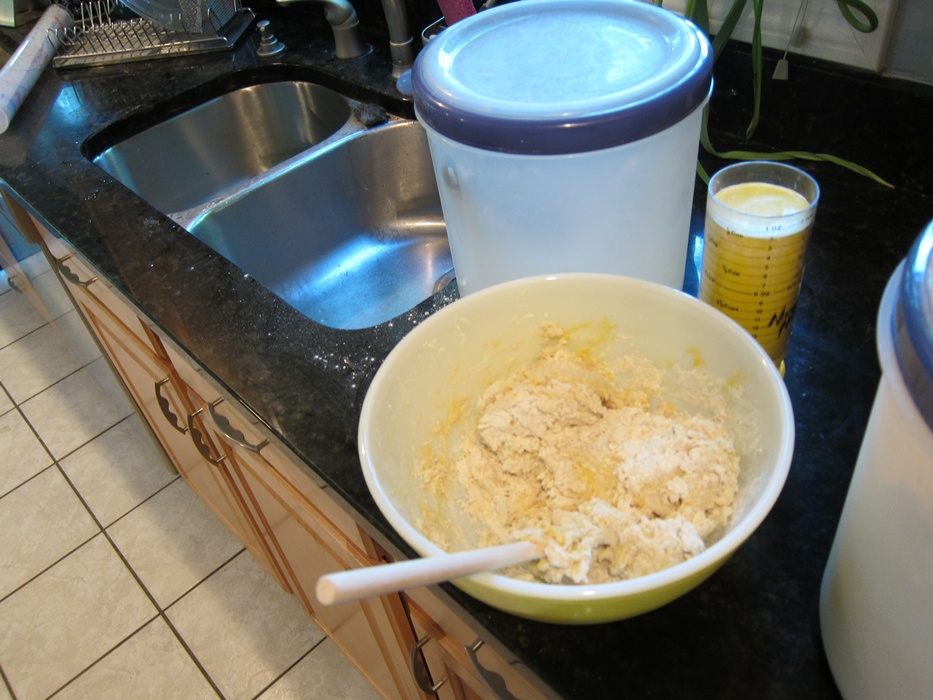
To make the dough, whisk the warm buttermilk and the cooled butter together in a measuring cup or small bowl. (I just poured the still-hot butter in cool buttermilk and figured it would be pretty much the same.) Combine 4 cups of flour, the sugar, yeast, and salt in a large bowl and stir together. Add the buttermilk mixture and the eggs and stir together.

Turn out onto a lightly floured surface and knead until the dough is smooth and elastic, 15-18 minutes. If the dough remains sticky after several minutes of kneading, slowly add the remaining flour until the dough is no more than lightly tacky.

Lightly grease a large bowl and put your kneaded dough in it. Cover and let rise somewhere warm and draft-free until doubled, 2 – 2 1/2 hours.

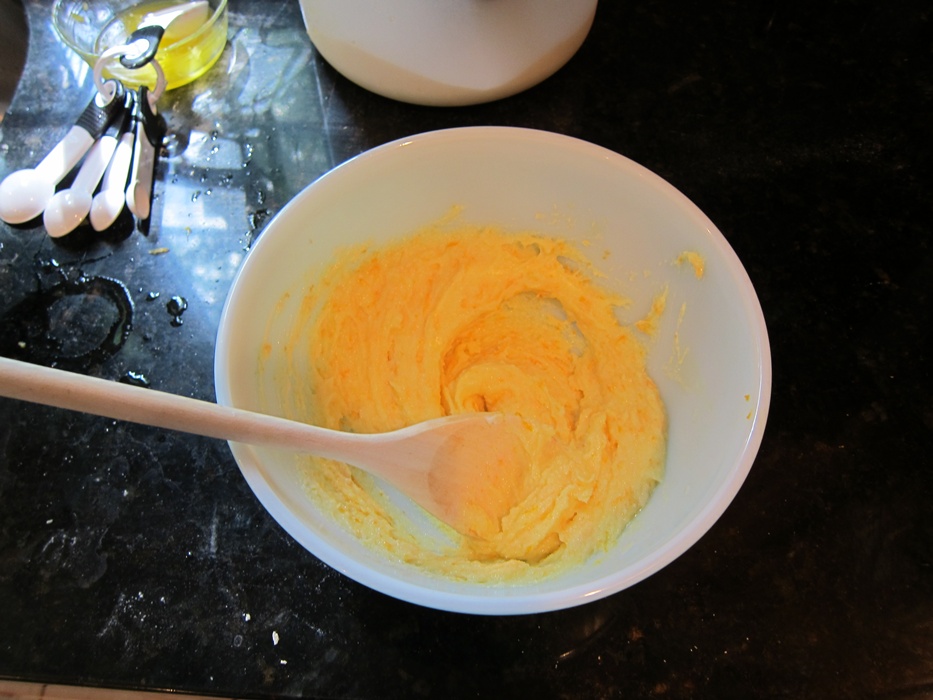
When the dough is almost ready, stir together the filling ingredients, then set aside. Lightly grease a baking sheet and set that aside too.

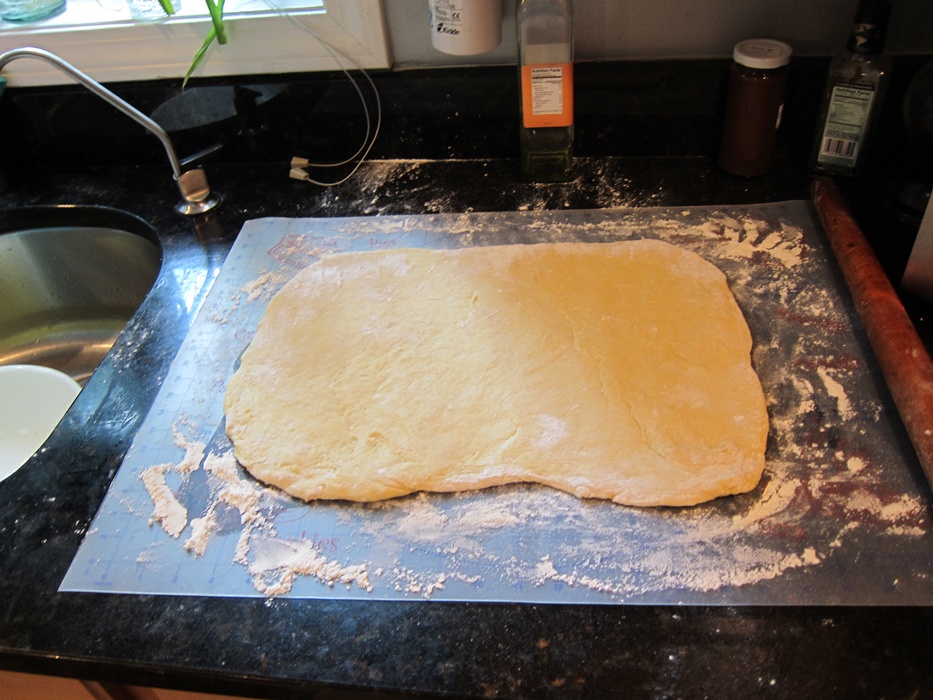
Turn the risen dough out onto a lightly floured surface and roll/pat it into a 16X12″ rectangle.

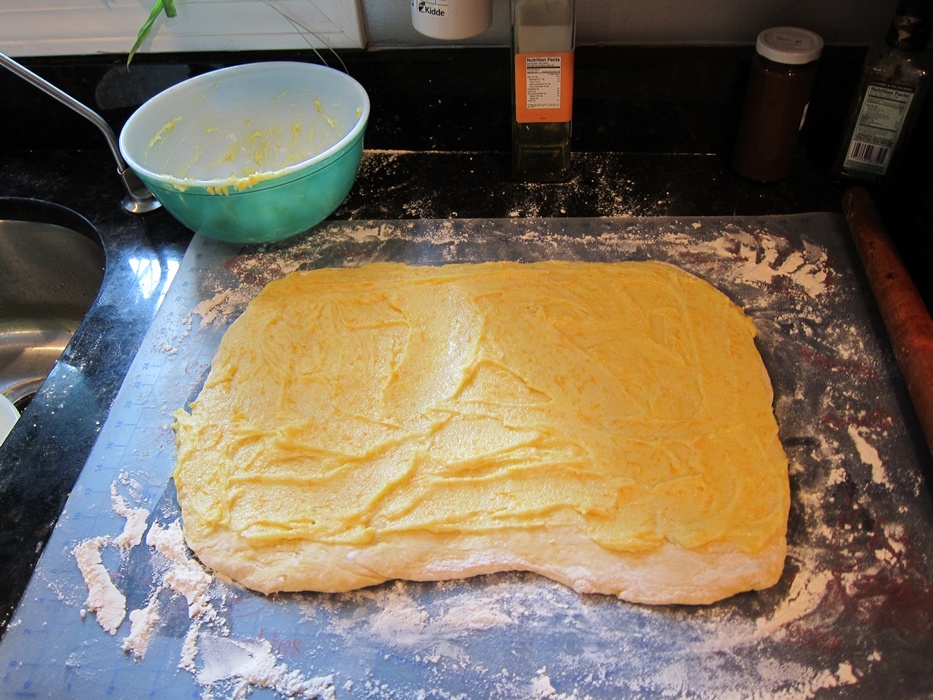
Spread the filling over the dough, covering it all evenly except one of the long edges, where you should leave about an inch clear.

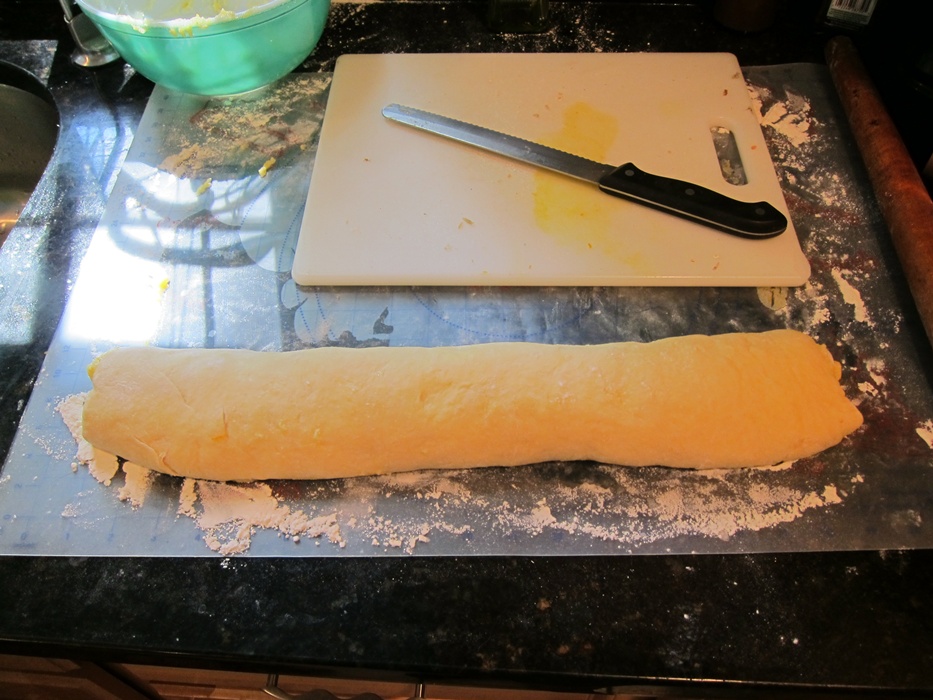
Roll from the coated long side towards the un-coated one, sealing closed by pressing the clear edge against the rest of the log.

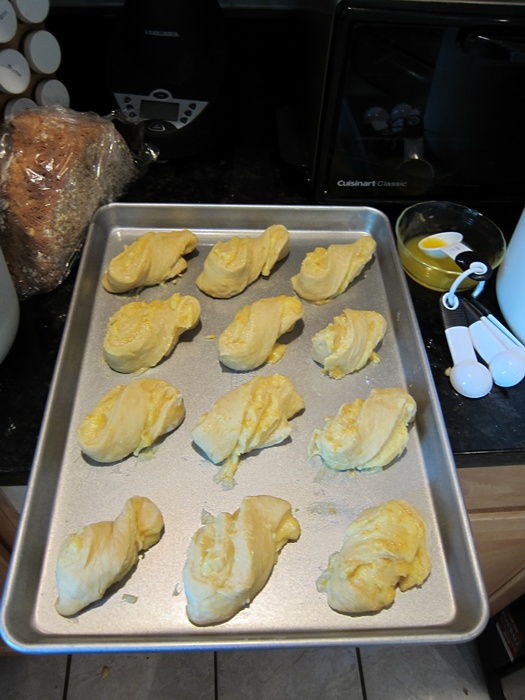
Cut the log into 12 even pieces. Holding opposite sides of a roll and twist it into a figure 8 before placing on a baking sheet.

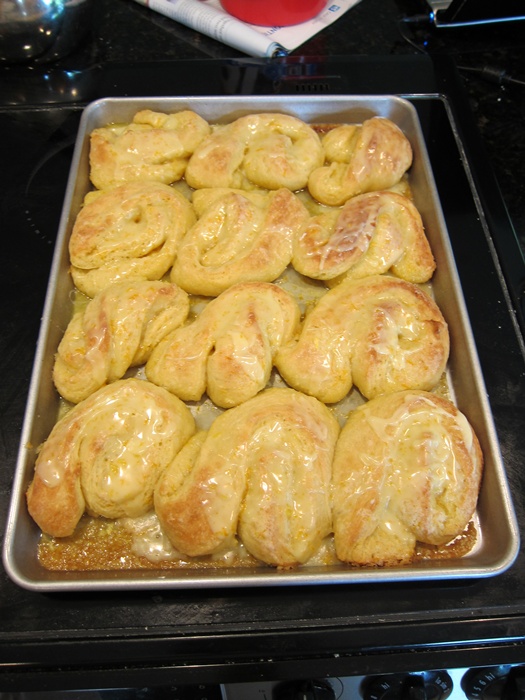
We should have pressed the ends of ours down onto the pan a bit, as most of them untwisted when they baked and a firmer grip on the pan might have helped stop that. Cover the rolls with saran wrap and let rise again until doubled, 1 – 1 1/2 hours.

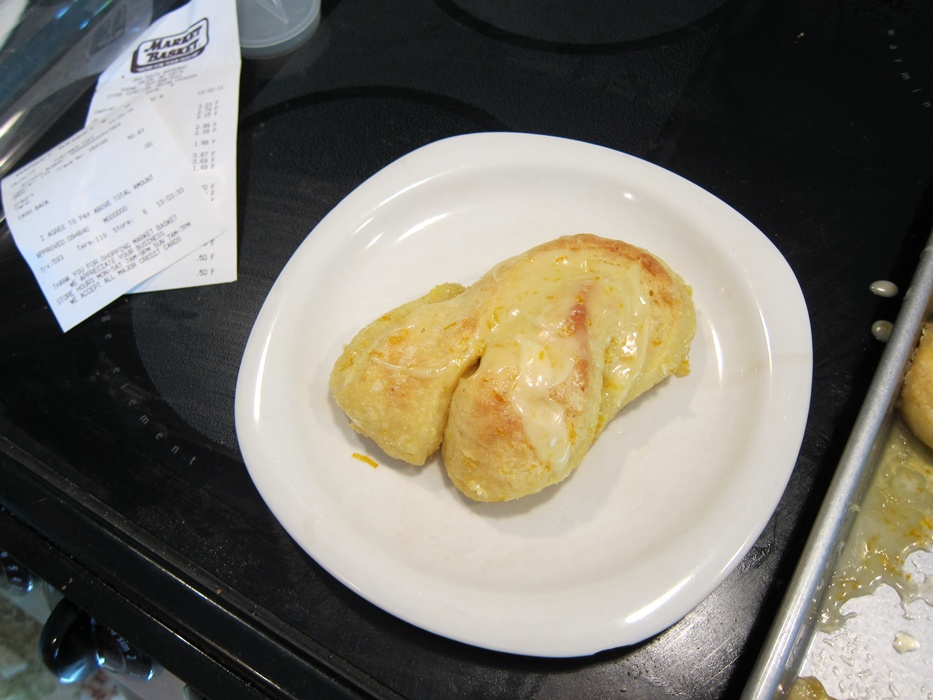
Preheat the oven to 350 degrees. Bake for 22-25 minutes, until lightly golden on top. While they bake, whisk the glaze ingredients together. Drizzle over the still-warm rolls. Scarf promptly, or store in a tupperware for a few days.

These were quite tasty! My mother’s not often into things that are even fruit flavored, but she liked these! I’ll be submitting this recipe to yeastspotting.

Orange Sweet Rolls

From Mel’s Kitchen Cafe.

Dough:

  •  3/4 cup buttermilk, warm
  • 6 tablespoons butter, melted and cooled
  • 3 large eggs
  • 4 1/4 cups flour
  • 1/4 cup sugar
  • 2 1/4 teaspoons or one package instant yeast
  • 1 1/4 teaspoons salt

Orange Filling:

  • 1/2 cup unsalted butter, room temperature
  • 1 cup sugar
  • 2 tablespoons freshly squeezed orange juice
  • grated orange rind/zest from two large oranges (reserving 1/2 teaspoon zest for the glaze below)

Orange Glaze:

  • 1 1/2 cups powdered sugar
  • 3 tablespoons freshly squeezed orange juice from about 1 orange
  • 1/2 teaspoon grated orange rind/zest reserved from the filling above

To make the dough, whisk the warm buttermilk and the cooled butter together in a measuring cup or small bowl. Combine 4 cups of flour, the sugar, yeast, and salt in a large bowl and stir together. Add the buttermilk mixture and the eggs and stir together.

Turn out onto a lightly floured surface and knead until the dough is smooth and elastic, 15-18 minutes. If the dough remains sticky after several minutes of kneading, slowly add the remaining flour until the dough is no more than lightly tacky.

Lightly grease a large bowl and put your kneaded dough in it. Cover and let rise somewhere warm and draft-free until doubled, 2 – 2 1/2 hours.

When the dough is almost ready, stir together the filling ingredients, then set aside. Lightly grease a baking sheet and set aside.

Turn the risen dough out onto a lightly floured surface and roll/pat it into a 16X12″ rectangle. Spread the filling evenly over the dough, leaving about an inch along one of the long sides clear. Roll from one long side towards the other, un-filling-covered long side and press seam closed.

Cut the log into 12 even pieces. Holding opposite sides of a roll and twist it into a figure 8 before placing on a baking sheet. Cover the rolls with saran wrap and let rise again until doubled, 1 – 1 1/2 hours.

Preheat the oven to 350 degrees. Bake for 22-25 minutes, until lightly golden on top. While they bake, whisk the glaze ingredients together. Drizzle over the still-warm rolls.

Posted in Breakfast, Brunch, Dessert | Tagged , | Leave a comment

A Very Old Mac And Cheese Recipe

A blog I found recently and think is super cool, Kitchen Historic, is all antique recipes, which she sort of interprets into current measurements and ingredients. It’s a fun concept, quite different from all the other blogs I follow, and has some delicious recipes. This mac and cheese recipe, for instance, is from 1870!

Ingredients:

  • 10 ounces macaroni (I used a 16 ounce package of shells and there was still enough cheese sauce)
  • 2 cups milk (I used skim, it’s what we have)
  • 4 tablespoons all-purpose flour
  • 4 tablespoons unsalted butter
  • 2/3 cup cream
  • 1 teaspoon mustard powder
  • 1 teaspoon salt
  • 1 teaspoon pepper
  • cayenne, to taste
  • 8 ounces old cheddar, grated

In a large pot, cook the macaroni until tender according to the package directions. Strain, and return the macaroni to the pot.

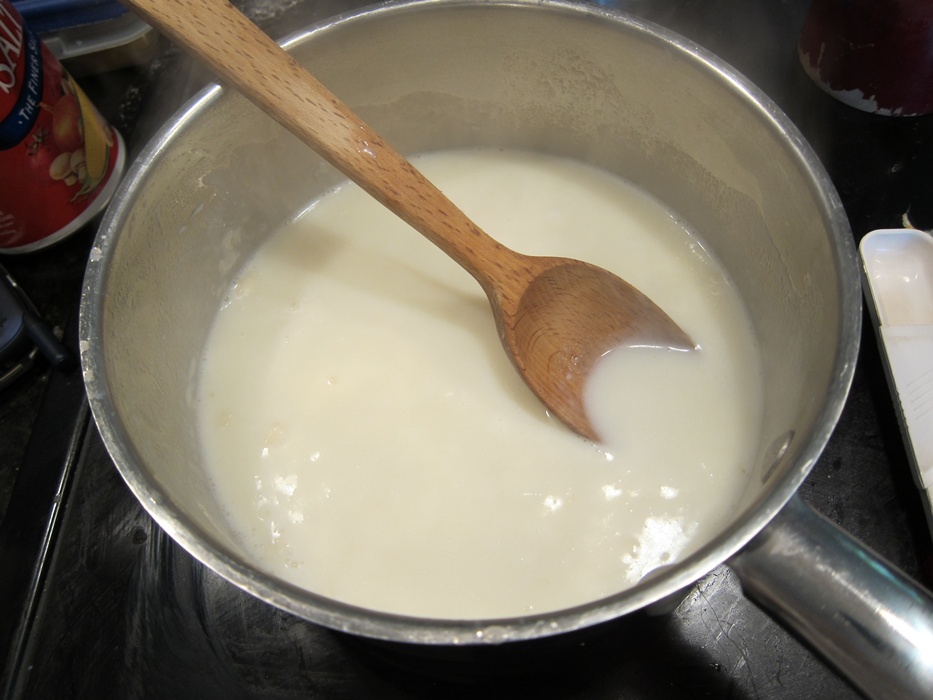
While the macaroni cooks, mix the milk, flour, and butter in a medium saucepan over medium heat. Cook, stirring frequently, until the butter has melted.

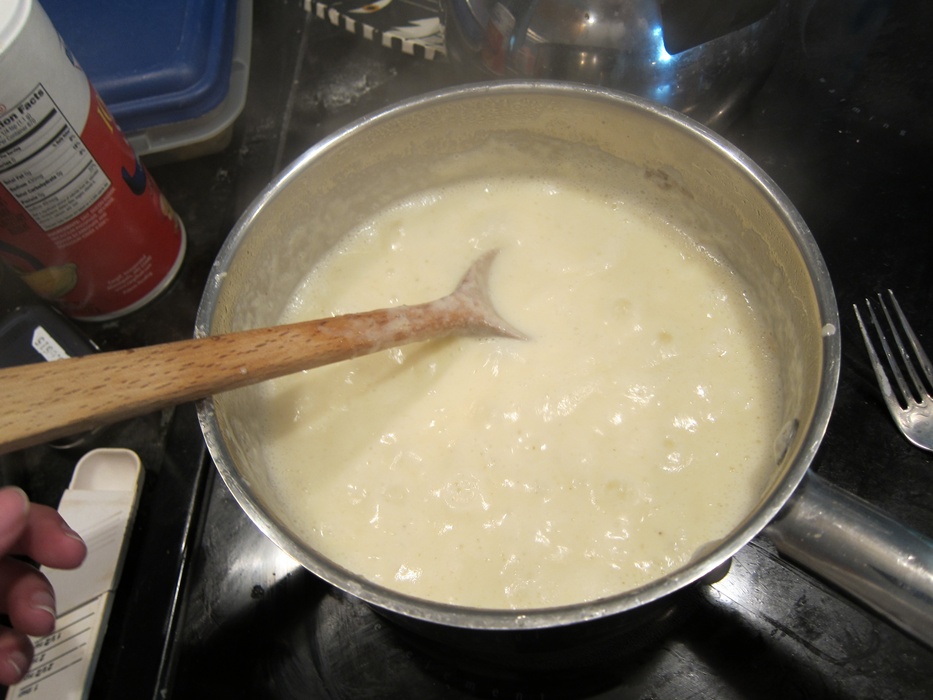
Stir in the cream, mustard, salt, pepper, cayenne, and cheese. Simmer for 5 minutes, or until thickened.

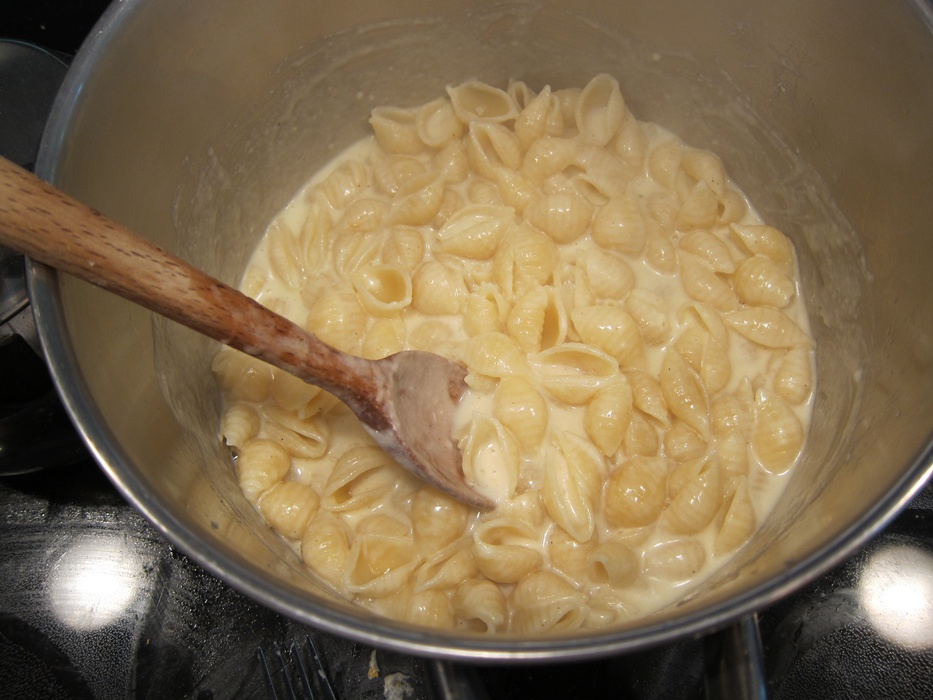
Pour the sauce over the macaroni and stir to coat.

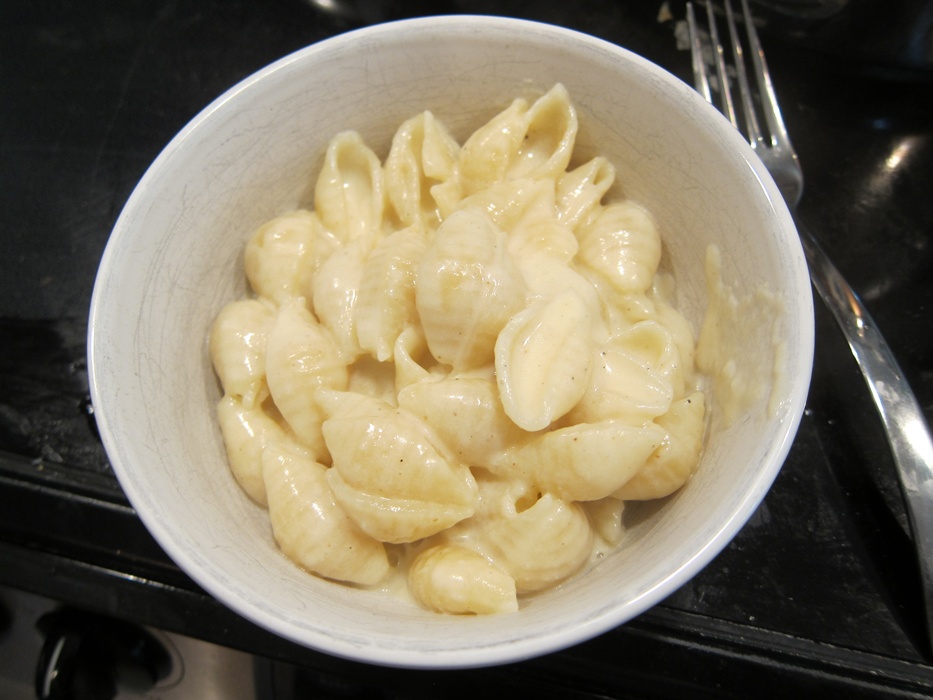
At this point you’re ready to eat, although my mom would argue it’d be even better if you transferred it to an oven safe dish and broiled for a minute or two until the cheese on the top got crusty. It’s creamy and cheesy, and you can make it as spicy as you’d like with the cayenne. It makes the boxed stuff taste just…orange.

Macaroni And Cheese (1870)

From Kitchen Historic. Do click through to see how the recipe was written originally!

  • 10 ounces macaroni
  • 2 cups milk
  • 4 tablespoons all-purpose flour
  • 4 tablespoons unsalted butter
  • 2/3 cup cream
  • 1 teaspoon mustard powder
  • 1 teaspoon salt
  • 1 teaspoon pepper
  • cayenne, to taste
  • 8 ounces old cheddar, grated

In a large pot, cook the macaroni until tender according to the package directions. Strain, and return the macaroni to the pot.

While the macaroni cooks, mix the milk, flour, and butter in a medium saucepan over medium heat. Cook, stirring frequently, until the butter has melted. Stir in the cream, mustard, salt, pepper, cayenne, and cheese. Simmer for 5 minutes, or until thickened.

Pour the sauce over the macaroni and stir to coat. Enjoy!

Posted in Dinner | Tagged | 2 Comments

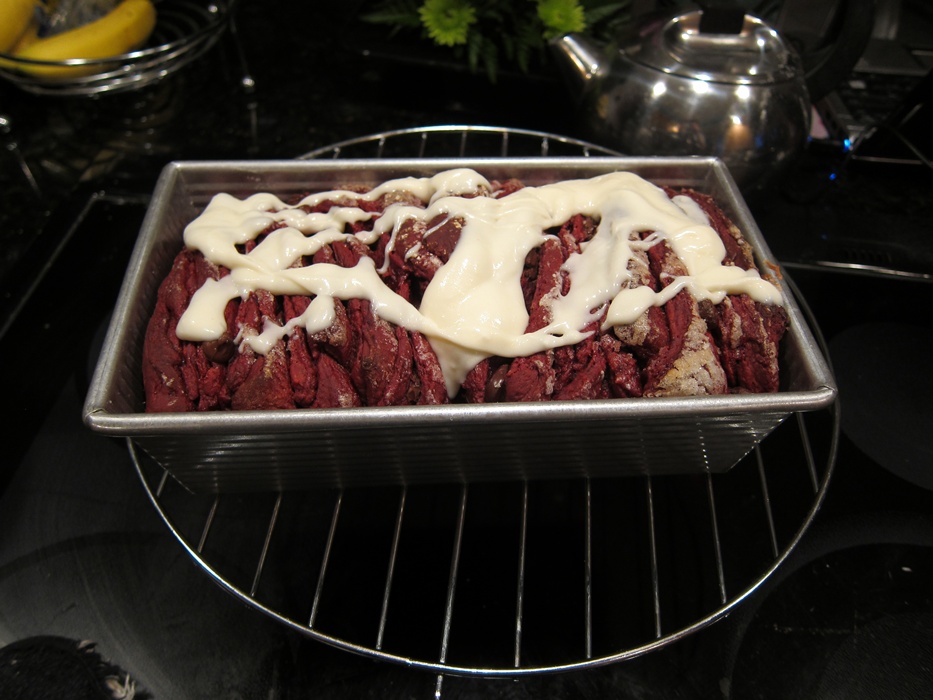
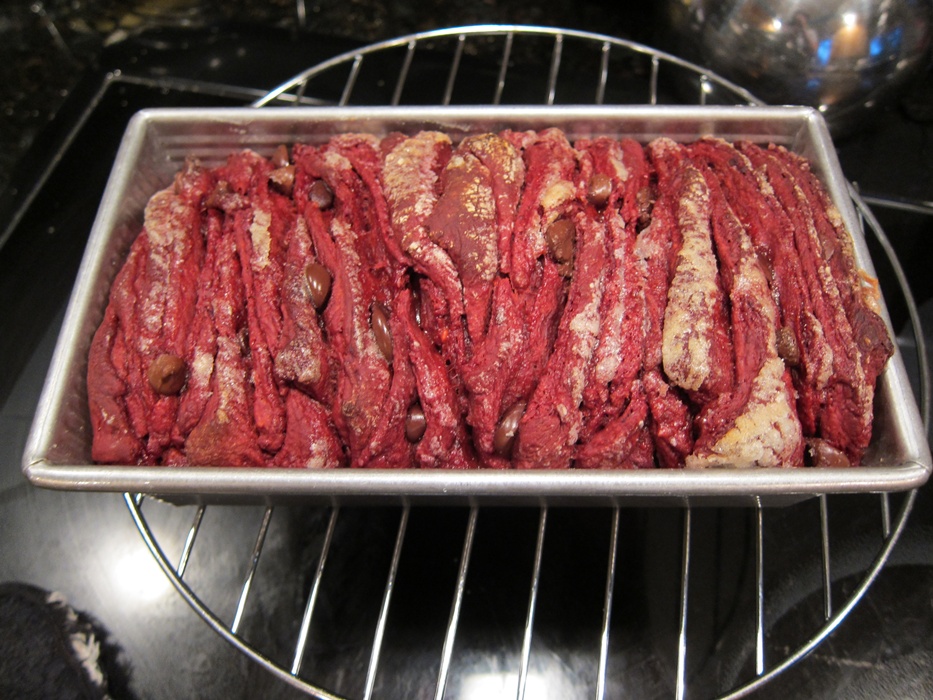
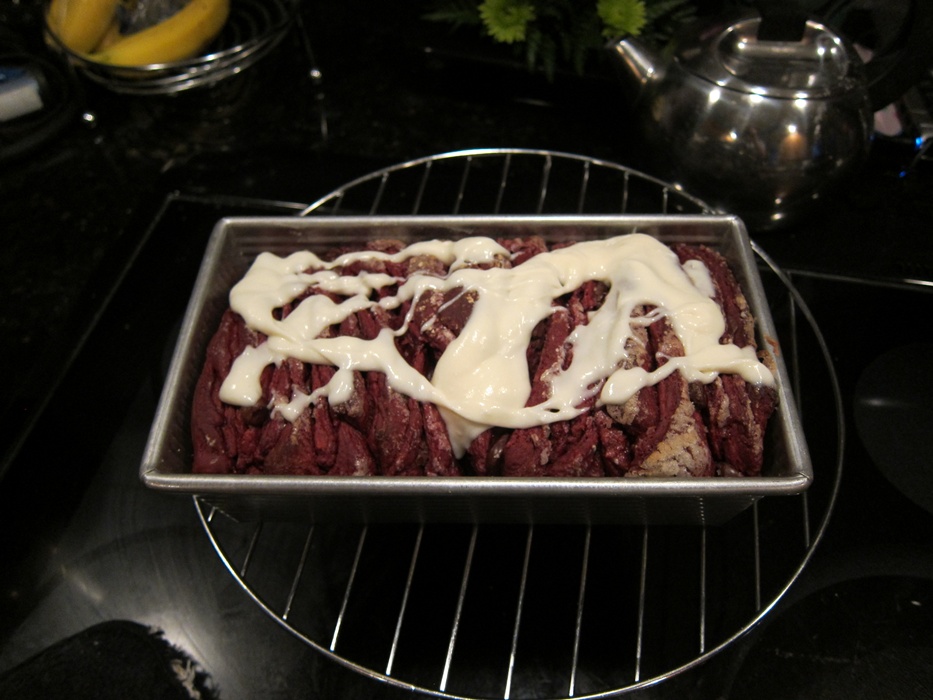
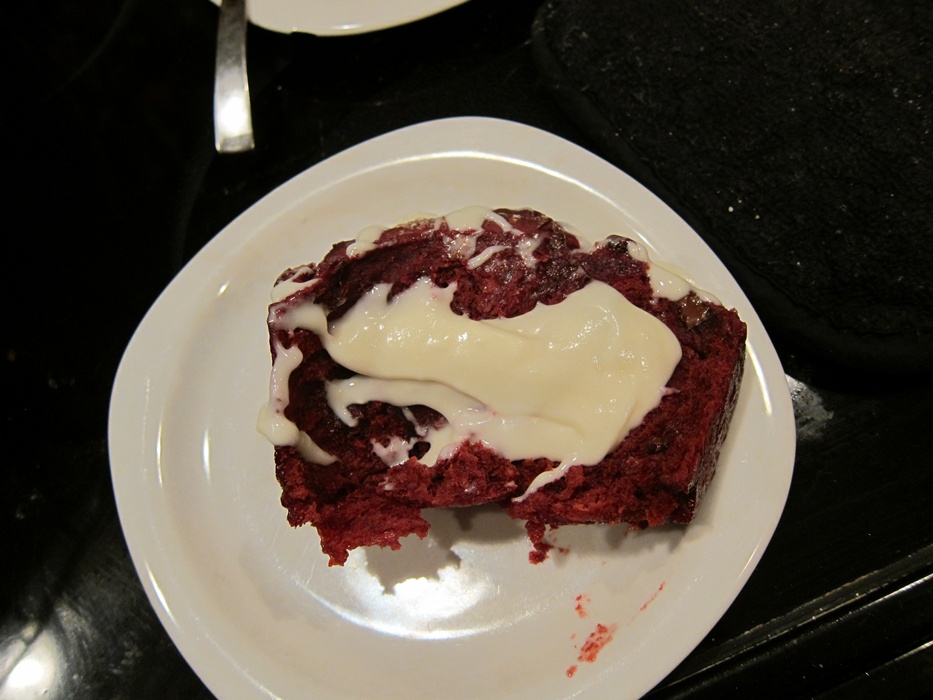
Red Velvet Pull-Apart Bread With Cream Cheese Glaze

I made this way back on Mothers’ Day, and, even though it was really friggin’ good, I just have been tooooo lazy to type it up since then. But it’s too good not to share, gotta get posting!

Ingredients:

Bread Starter:

  • 1/4 teaspoon active dry yeast
  • 1 cup warm water (100-110 degrees F)
  • 1 cup all-purpose flour, plus 3 tablespoons all-purpose flour

Red Velvet Yeast Bread:

  • 2 1/2 cups bread flour
  • 1/4 cup cocoa powder
  • 2 tablespoons (1 ounce – you can get 1 ounce bottles at the store) red food coloring plus 1 tablespoon water
  • 1/3 cup sugar
  • 2 teaspoons active dry yeast
  • 1 cup minus 3 tablespoons lukewarm water (100-110 degrees F)
  • 1 1/4 teaspoons table salt
  • 2 tablespoons unsalted butter, room temperature
  • vegetable oil for lightly oiling bowl

Filling:

  • 1/2 cup granulated sugar
  • 2 tablespoons semisweet chocolate chips
  • 2 tablespoons bittersweet chocolate chips
  • 2 tablespoons unsalted butter, melted

Cream Cheese Glaze:

  • 2 ounces cream cheese, room temperature
  • 1/2 cup powdered sugar
  • 2 tablespoons unsalted butter, room temperature
  • 1/4 teaspoon vanilla extract
  • about 3 tablespoons milk as
  • mini chocolate chips for sprinkling (I totally forgot these, it wasn’t a big deal)

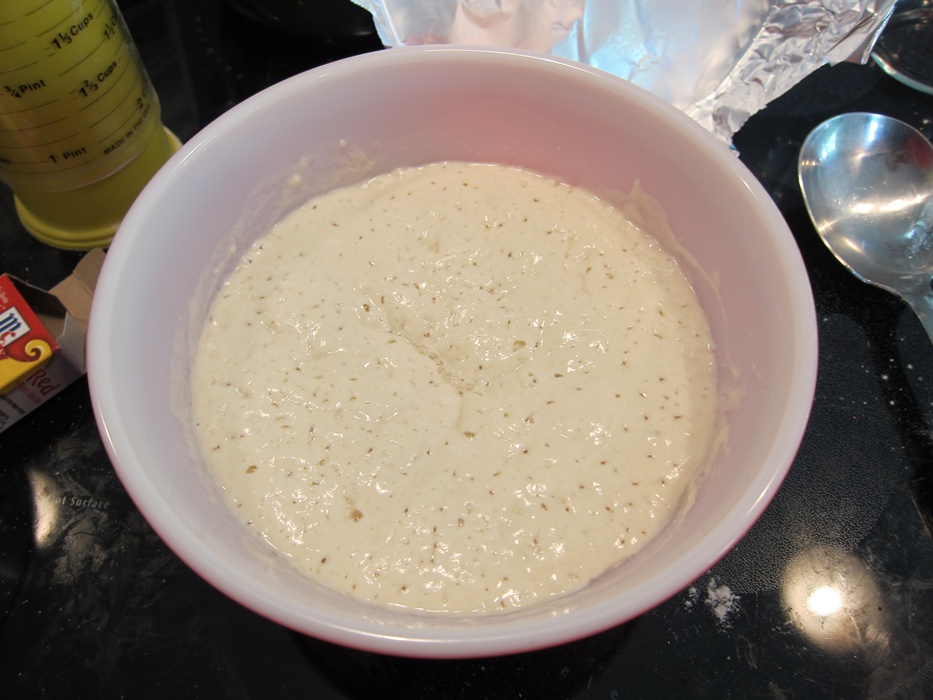
To start off with, you make the bread starter by dissolving the yeast in the warm water and letting it sit about ten minutes. Stir in the flour, cover loosely, and let sit 6 hours.

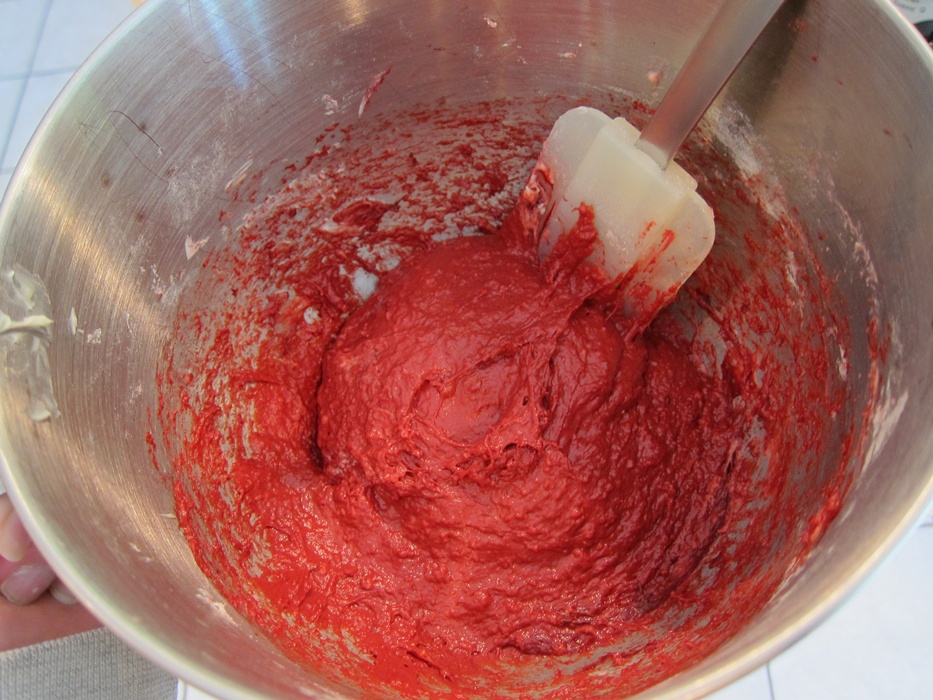
When your starter’s ready, in a different small bowl combine the cocoa powder, red food coloring, and tablespoon of water.

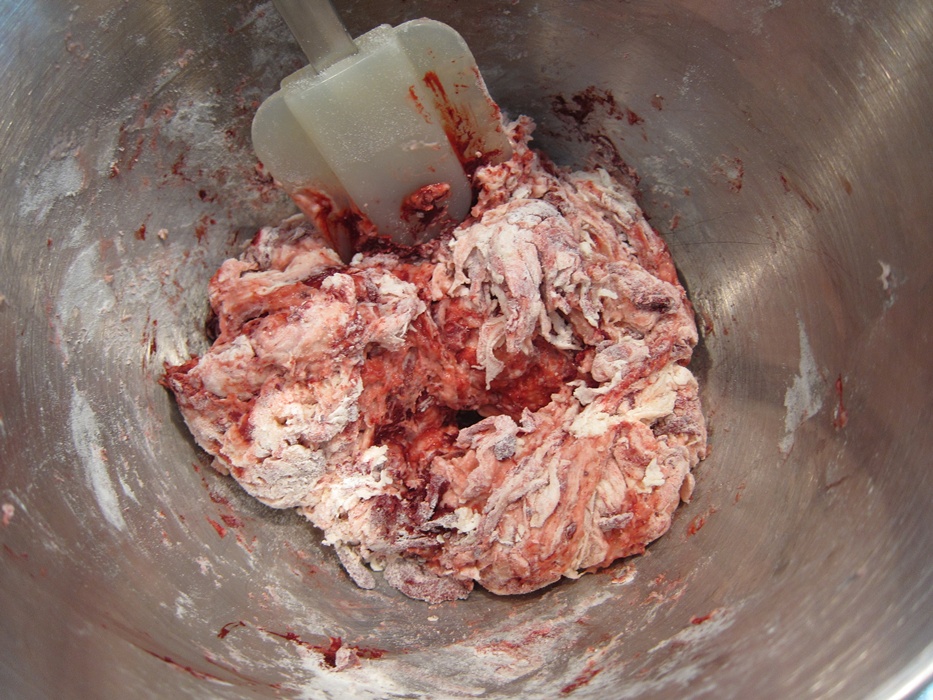
In a medium bowl, combine the red paste, the flour, sugar, yeast, water, and 1/4 cup of the starter and let rest for 15 minutes. Save the rest of the starter for other recipes – I used it for my salted caramel apple sourdough challah.

Knead in the salt and butter, then knead a further 10  minutes, if by hand, or 4 minutes with a dough hook, until smooth and elastic.

This looks goopier than it was in person, I think.

Lightly oil a large bowl and turn the dough into it. Cover loosely and let rise until doubled, about one and a half hours. Leaving the dough in the bowl, fold it in thirds like a letter to deflate, then recover an let rise a further half hour.

The recipe then calls for greasing two 7X3″ loaf pans. I used one 9X5″ pan and thought it was a good size, so that’s an option as well.

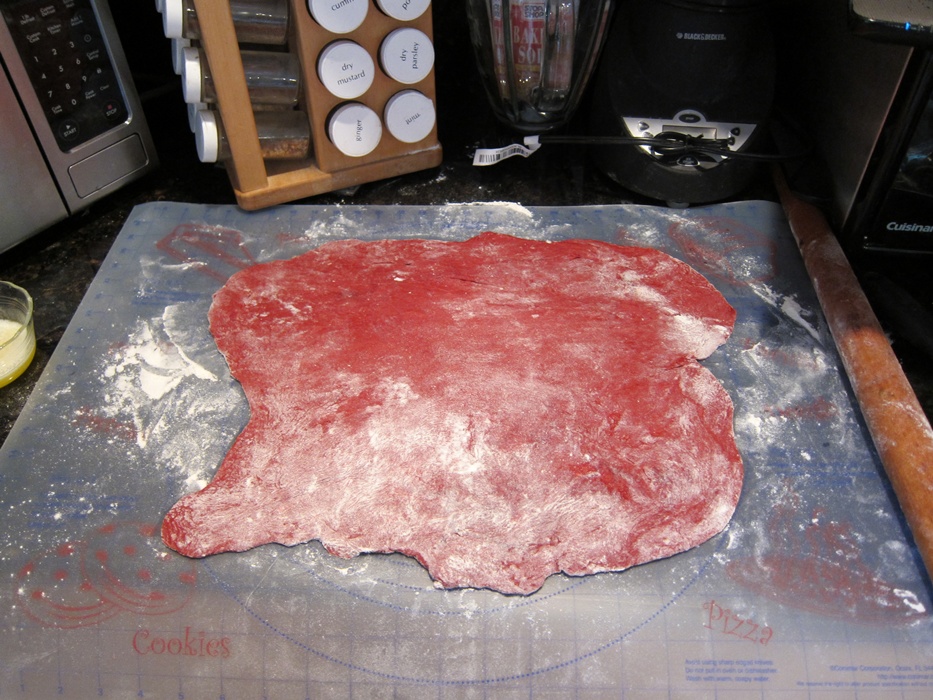
Turn half the dough out onto a floured counter and roll out to a roughly 15X12″ rectangle.

“Roughly” indeed.

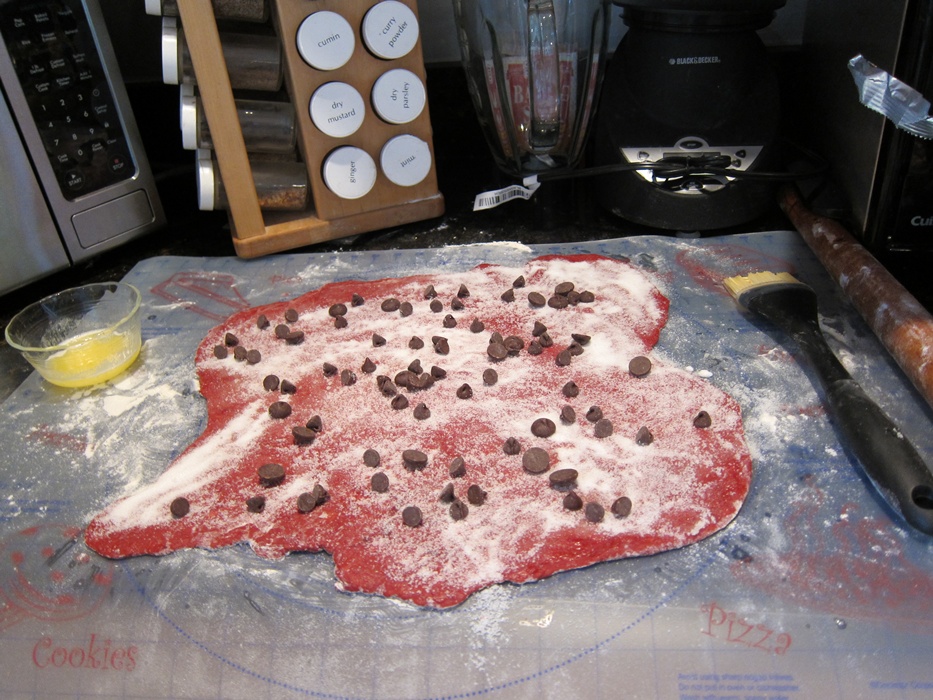
Brush half the melted butter over the dough, then sprinkle with half the sugar and chocolate chips. It may not seem like the dough has a ton of room to let the chips in, but if you pat them down they will actually stick into the dough a bit.

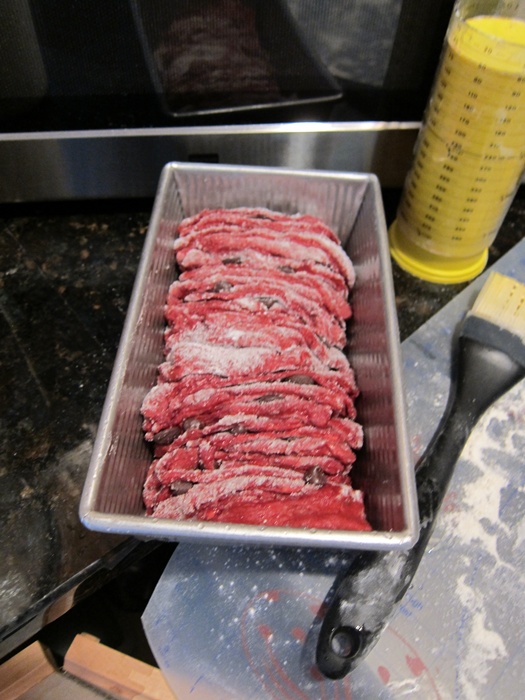
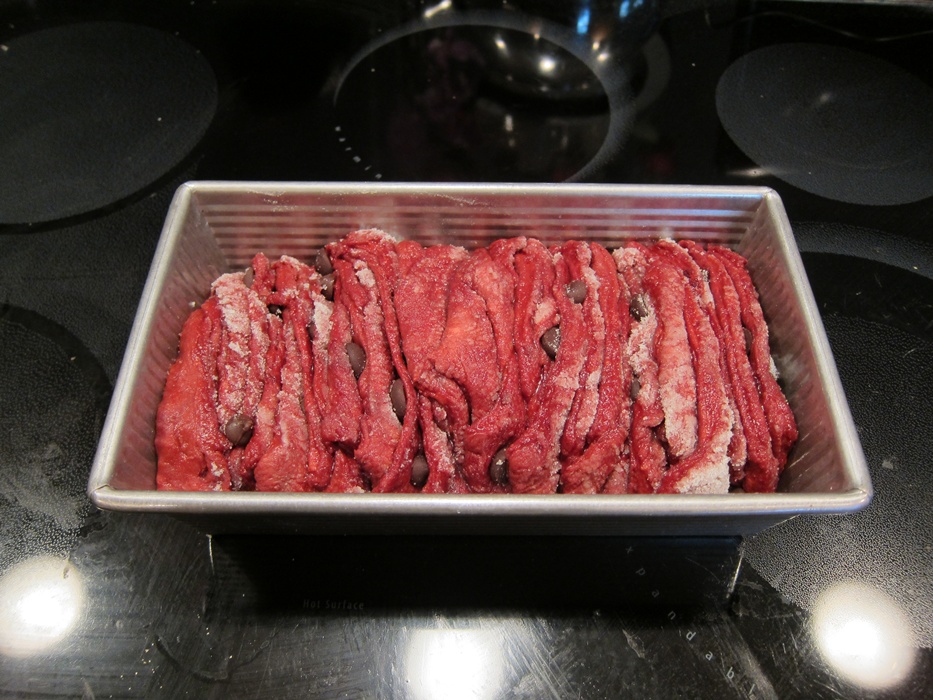
Cut the dough into 6 strips in one direction, and then cut each strip into 6 squares. Pile the squares on top of each other, cramming any chips that fall out back in. Lay the squares on their edges in your prepared bread pan, then repeat with the other half of the dough.

Cover your bread pan(s), and let the dough rise 45 minutes.

Preheat the oven to 350 degrees. When the dough has risen, uncover and bake 30-35 minutes, until the top is dark brown. If you only used one bread pan, it could take a bit longer, just keep an eye on it. Cool in the pan until it’s a temperature you can eat without getting internal burns. Distract yourself by making the glaze.

To make the glaze, beat the cream cheese and butter until fluffy. Add the sugar and vanilla, then use the milk to thin it to a drizzling consistency. Drizzle some on top of the loaf, and save some for the separate slices. Sprinkle with mini chocolate chips.
There’s a whole lot of waiting in this recipe, but it’s totally worth it. The bread was a bit tangy, from the starter, and deliciously chocolatey. I’m really into it.

Red Velvet Pull-Apart Bread With Cream Cheese Glaze

From Willow Bird Baking.

Bread Starter:

  • 1/4 teaspoon active dry yeast
  • 1 cup warm water (100-110 degrees F)
  • 1 cup all-purpose flour, plus 3 tablespoons all-purpose flour

Red Velvet Yeast Bread:

  • 2 1/2 cups bread flour
  • 1/4 cup cocoa powder
  • 2 tablespoons (1 ounce) red food coloring plus 1 tablespoon water
  • 1/3 cup sugar
  • 2 teaspoons active dry yeast
  • 1 cup minus 3 tablespoons lukewarm water (100-110 degrees F)
  • 1 1/4 teaspoons table salt
  • 2 tablespoons unsalted butter, room temperature
  • vegetable oil for lightly oiling bowl

Filling:

  • 1/2 cup granulated sugar
  • 2 tablespoons semisweet chocolate chips
  • 2 tablespoons bittersweet chocolate chips
  • 2 tablespoons unsalted butter, melted

Cream Cheese Glaze:

  • 2 ounces cream cheese, room temperature
  • 1/2 cup powdered sugar
  • 2 tablespoons unsalted butter, room temperature
  • 1/4 teaspoon vanilla extract
  • about 3 tablespoons milk as
  • mini chocolate chips for sprinkling

Make the bread starter by dissolving the yeast in the warm water, letting it sit about ten minutes. Stir in the flour, cover loosely, and let sit 6 hours.

When your starter’s ready, in a different small bowl combine the cocoa powder, red food coloring, and tablespoon of water. Combine this red paste, the flour, sugar, yeast, water, and 1/4 cup of the starter in a medium bowl and let rest for 15 minutes. Knead in the salt and butter, then knead a further 10  minutes, if by hand, or 4 minutes with a dough hook, until smooth and elastic.

Lightly oil a large bowl and turn the dough into it. Cover loosely and let rise until doubled, about one and a half hours. Leaving the dough in the bowl, fold it in thirds like a letter to deflate, then recover an let rise a further half hour.

Grease two 7X3″ loaf pans.

Turn half the dough out onto a floured counter and roll out to a roughly 15X12″ rectangle. Brush half the melted butter over the dough, then sprinkle with half the sugar and chocolate chips. Pat the chocolate chips into the dough lightly.

Cut the dough into 6 strips in one direction, and then cut each strip into 6 squares. Pile the squares on top of each other, cramming any chips that fall out back in. Lay the squares on their edges in your prepared bread pan, then repeat with the other half of the dough. Cover your bread pans, and let the dough rise 45 minutes.

Preheat the oven to 350 degrees. When the dough has risen, uncover and bake 30-35 minutes, until the top is dark brown. Cool in the pan until just warm.

To make the glaze, beat the cream cheese and butter until fluffy. Add the sugar and vanilla, then use the milk to thin it to a drizzling consistency. Drizzle some on top of the loaf, and save some for the separate slices. Sprinkle with mini chocolate chips.

Posted in Bread, Dessert | Tagged , , | Leave a comment